
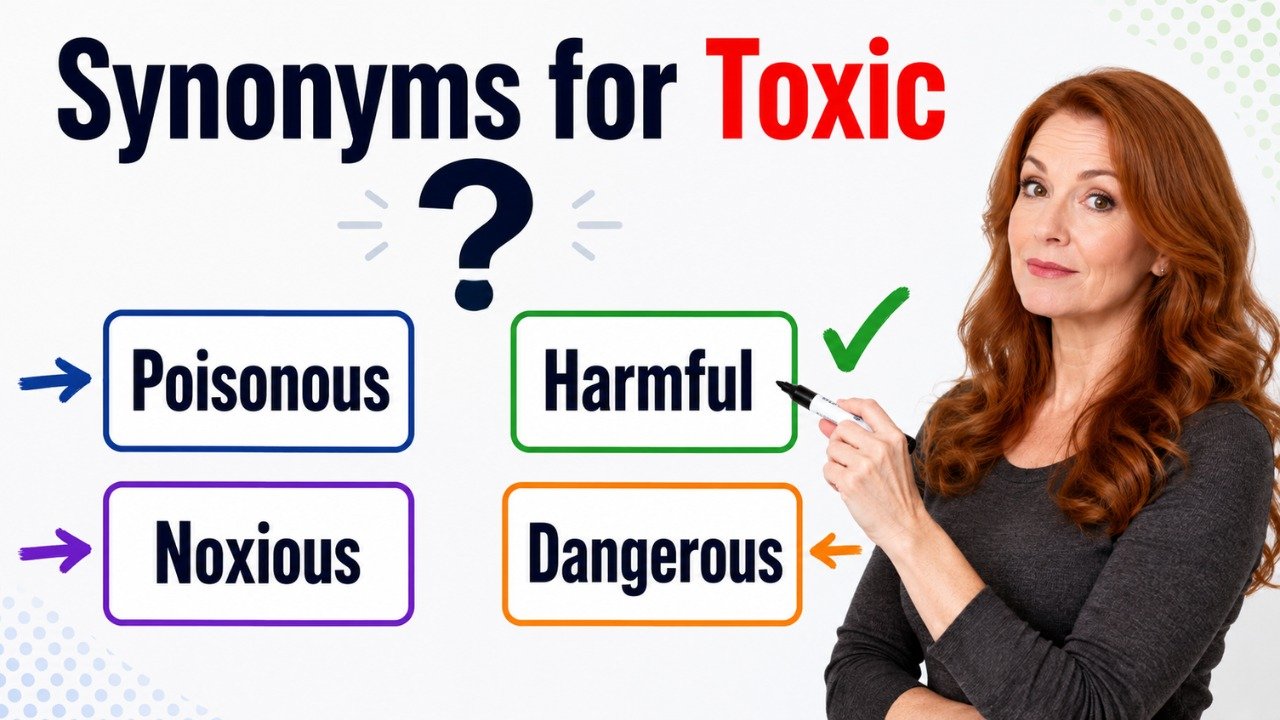
Quick Answer: Synonyms for toxic include poisonous, harmful, dangerous, noxious, hazardous, damaging, unhealthy, abusive, manipulative, and negative. Use poisonous or noxious for chemicals and substances, harmful or dangerous for health risks, and abusive or manipulative for damaging behavior. Negative works well for attitudes and environments, while hazardous is more suitable for formal safety instructions.
Pronunciation and Word Details
Word: Toxic.
Pronunciation: /ˈtɑːksɪk/ or /ˈtɒksɪk/.
Part of Speech: Adjective.
Meaning: Poisonous, physically harmful, emotionally damaging, or capable of causing serious negative effects.
US Pronunciation:
UK Pronunciation:
What Does “Toxic” Mean?
Toxic means poisonous, harmful, or capable of causing physical, emotional, or social damage.
The word toxic is an adjective. It originally describes substances that can poison living organisms. It is commonly used for chemicals, fumes, gases, waste, food, and other materials that may cause illness, injury, or death.
Toxic can also describe behavior, relationships, workplaces, attitudes, and environments that cause emotional stress or lasting harm. A toxic relationship may involve manipulation, cruelty, control, disrespect, or constant conflict.
In scientific and safety contexts, toxic usually refers to measurable physical danger. In everyday conversation, it often describes people, habits, or situations that negatively affect emotional well being.
Meaning, Tone, and Context of “Toxic”
Toxic has a strong and negative tone. It suggests that something is not merely unpleasant but seriously harmful.
Scientific Context: Toxic describes substances that can damage the body, environment, plants, or animals.
Safety Context: The word warns people about dangerous chemicals, fumes, waste, or contaminated materials.
Medical Context: Toxic may describe harmful substances, reactions, doses, or effects on the body.
Environmental Context: It can describe pollution, chemical waste, contaminated water, or dangerous emissions.
Emotional Context: Toxic describes behavior or relationships that damage confidence, peace, trust, or emotional health.
Workplace Context: A toxic environment may include hostility, unfair treatment, intimidation, blame, or constant conflict.
Conversational Context: People often use toxic to describe a harmful attitude, habit, influence, or personality.
The word is suitable for formal, technical, and conversational writing. However, writers should choose a more precise synonym when the exact type of harm is known.
When and How to Use “Toxic”
For Poisonous Substances: Use toxic when a chemical, gas, liquid, or material can cause poisoning.
Example: The laboratory stores toxic chemicals in secure containers.
For Health Risks: Use toxic when something may seriously harm the human body.
Example: Breathing toxic fumes can damage the lungs.
For Environmental Damage: Use toxic when pollution or waste threatens natural life.
Example: Toxic waste contaminated the nearby soil.
For Harmful Relationships: Use toxic when a relationship causes emotional pain, fear, stress, or loss of confidence.
Example: She decided to leave the toxic relationship.
For Damaging Behavior: Use toxic for manipulation, cruelty, hostility, control, or repeated disrespect.
Example: His toxic behavior affected the entire group.
For Negative Environments: Use toxic when a place or culture creates constant anxiety, conflict, or emotional exhaustion.
Example: Employees struggled to remain motivated in the toxic environment.
For Harmful Attitudes: Use toxic when an attitude encourages hatred, bitterness, blame, or negativity.
Example: A toxic attitude can damage otherwise healthy relationships.
Best Synonyms for Toxic
Poisonous: Containing a substance that can cause illness, injury, or death.
Example: The berries are poisonous and should not be eaten.
Harmful: Causing damage or negative effects.
Example: Excessive exposure to the substance may be harmful.
Dangerous: Likely to cause injury, damage, or serious problems.
Example: The damaged container released dangerous fumes.
Noxious: Physically harmful or unpleasant, especially when describing gases or smells.
Example: Noxious fumes spread through the storage area.
Hazardous: Involving a serious risk to health or safety.
Example: Workers received training for handling hazardous materials.
Damaging: Producing physical, emotional, or social harm.
Example: Constant criticism can be damaging to confidence.
Unhealthy: Harmful to physical or emotional well being.
Example: Their friendship had developed into an unhealthy attachment.
Abusive: Involving cruelty, mistreatment, threats, or harmful control.
Example: She sought support after leaving an abusive relationship.
Manipulative: Controlling someone through pressure, guilt, dishonesty, or emotional influence.
Example: His manipulative behavior made honest communication difficult.
Negative: Expressing or creating pessimism, criticism, or discouragement.
Example: A negative atmosphere reduced the group’s enthusiasm.
50 Synonyms for Toxic with Short Meanings
- Poisonous: Capable of causing poisoning or death.
- Venomous: Producing or containing venom.
- Noxious: Harmful to health or physically unpleasant.
- Lethal: Capable of causing death.
- Deadly: Extremely dangerous or fatal.
- Harmful: Causing physical, emotional, or social damage.
- Dangerous: Likely to cause injury or serious problems.
- Hazardous: Presenting a risk to health or safety.
- Injurious: Causing harm, injury, or damage.
- Detrimental: Producing an undesirable or damaging effect.
- Damaging: Causing harm or reducing quality.
- Destructive: Causing serious or permanent damage.
- Pernicious: Gradually causing serious harm.
- Deleterious: Harmful to health, success, or development.
- Adverse: Unfavorable or harmful in effect.
- Unhealthy: Harmful to physical or emotional well being.
- Unsafe: Not protected from danger or harm.
- Contaminated: Made impure or dangerous by harmful substances.
- Polluted: Containing damaging chemicals or waste.
- Tainted: Affected by something harmful, dishonest, or impure.
- Infected: Containing harmful organisms or disease.
- Virulent: Extremely harmful, severe, or hostile.
- Caustic: Able to burn materials or emotionally wound people.
- Corrosive: Gradually destroying materials, trust, or relationships.
- Acrid: Strong, bitter, and irritating to the senses.
- Irritating: Causing physical discomfort or emotional annoyance.
- Malignant: Dangerous, harmful, and likely to become worse.
- Ruinous: Causing severe damage or destruction.
- Devastating: Producing overwhelming harm or loss.
- Insidious: Gradually causing harm without being noticed.
- Baneful: Causing destruction, misery, or serious harm.
- Unwholesome: Harmful to health, morals, or emotional well being.
- Abusive: Involving cruelty, mistreatment, or harmful control.
- Manipulative: Influencing others through unfair emotional control.
- Controlling: Restricting another person’s freedom or decisions.
- Hostile: Unfriendly, aggressive, or threatening.
- Cruel: Intentionally causing emotional or physical suffering.
- Spiteful: Motivated by a desire to hurt or upset someone.
- Malicious: Intending to cause harm or distress.
- Bitter: Filled with anger, resentment, or hostility.
- Hateful: Expressing intense dislike or hostility.
- Oppressive: Creating unfair pressure, control, or suffering.
- Dysfunctional: Unable to operate in a healthy or effective way.
- Negative: Producing discouragement, pessimism, or harmful effects.
- Draining: Causing emotional or physical exhaustion.
- Stressful: Producing worry, pressure, or emotional tension.
- Demoralizing: Reducing confidence, hope, or motivation.
- Suffocating: Severely restricting freedom, comfort, or emotional space.
- Degrading: Damaging a person’s dignity or self respect.
- Intimidating: Creating fear through pressure, threats, or aggressive behavior.
Read Also:
Synonyms for Cynical
Synonyms for Toxic by Context
When Toxic Means Poisonous
Poisonous, venomous, lethal, deadly, and noxious describe substances that may cause illness, injury, or death.
Poisonous: Best for plants, food, chemicals, and substances that cause harm when touched, swallowed, or absorbed.
Example: The child was warned not to touch the poisonous plant.
Noxious: Best for harmful fumes, gases, smells, or airborne substances.
Example: The factory released noxious fumes into the air.
Lethal: Best when the substance can cause death.
Example: A lethal amount of the chemical entered the water.
When Toxic Means Harmful to Health
Harmful, dangerous, hazardous, injurious, unhealthy, and unsafe describe risks to physical well being.
Harmful: A broad and neutral alternative for something that causes damage.
Example: The treatment may have harmful side effects.
Hazardous: A formal choice for safety rules, materials, working conditions, or activities.
Example: Protective clothing is required when handling hazardous waste.
Unhealthy: Best for habits, diets, environments, and living conditions.
Example: Remaining inactive for long periods can be unhealthy.
When Toxic Describes Relationships or Behavior
Abusive, manipulative, controlling, hostile, cruel, and oppressive describe different forms of damaging behavior.
Abusive: Use when someone causes emotional, verbal, financial, or physical harm.
Example: He recognized that the relationship had become abusive.
Manipulative: Use when someone controls another person through guilt, pressure, or dishonesty.
Example: Her manipulative comments made him question his decisions.
Controlling: Use when someone limits another person’s choices or independence.
Example: His controlling behavior affected her confidence.
When Toxic Describes an Environment or Attitude
Negative, dysfunctional, draining, stressful, hostile, and demoralizing describe unhealthy emotional surroundings.
Negative: Best for attitudes, conversations, influences, and general atmospheres.
Example: The negative atmosphere made cooperation difficult.
Dysfunctional: Best when a group, family, or system cannot operate in a healthy way.
Example: Poor communication created a dysfunctional working environment.
Draining: Best for situations that consume emotional energy.
Example: The constant arguments became emotionally draining.
Another Word for Toxic
Harmful is often the best general replacement for toxic because it works in physical, emotional, environmental, and social contexts. However, the most accurate alternative depends on the type and severity of harm.
Original: The chemical is toxic when inhaled.
Better Option: The chemical is poisonous when inhaled.
Original: They worked in a toxic environment.
Better Option: They worked in a hostile environment.
Original: His toxic behavior damaged the friendship.
Better Option: His manipulative behavior damaged the friendship.
Original: The river contained toxic waste.
Better Option: The river contained hazardous waste.
When Not to Use “Toxic”
Toxic should not replace a more precise word when the specific type of danger or behavior is known.
In scientific or safety writing, state whether a substance is poisonous, corrosive, radioactive, irritating, or hazardous. Toxic may be accurate, but it does not always explain how the material causes harm.
Avoid using toxic simply because a person is annoying or difficult. The word suggests serious and repeated harm. Describing the exact behavior is usually clearer and fairer.
Writers should also avoid repeating toxic throughout a paragraph. Alternatives such as harmful, hostile, abusive, dangerous, or unhealthy can improve accuracy.
Weak: The toxic chemical caused a toxic reaction in the toxic environment.
Better: The poisonous chemical caused a harmful reaction in the contaminated environment.
Weak: My neighbor is toxic because he disagreed with me.
Better: My neighbor was disrespectful during our disagreement.
Weak: The meeting had a toxic feeling.
Better: The meeting had a tense and hostile atmosphere.
Weak: The substance may be toxic and bad.
Better: The substance may be hazardous to human health.
Words Commonly Confused With Toxic
Toxic vs Poisonous: Toxic is a broad term for substances that cause harm. Poisonous usually describes something that harms a person or animal when swallowed, touched, or absorbed.
Toxic vs Venomous: Toxic describes general poisonous effects. Venomous describes an animal that injects venom through a bite or sting.
Toxic vs Harmful: Toxic often suggests serious or poisonous effects. Harmful is broader and can describe mild or severe damage.
Toxic vs Hazardous: Toxic focuses on poisonous effects. Hazardous means something presents a risk, even when it is not poisonous.
Toxic vs Noxious: Toxic is a general term for poisonous substances. Noxious commonly describes harmful fumes, gases, odors, or airborne materials.
Toxic vs Corrosive: Toxic substances poison or harm living organisms. Corrosive substances chemically burn or gradually destroy materials and tissues.
Toxic vs Abusive: Toxic can broadly describe a damaging relationship. Abusive specifically identifies cruel, threatening, controlling, or violent behavior.
Toxic vs Negative: Toxic suggests serious damage. Negative may simply describe pessimism, criticism, or an unpleasant attitude.
Which Synonym Should You Choose?
Choose poisonous when describing food, plants, chemicals, or substances that can cause poisoning.
Choose noxious when discussing harmful fumes, gases, smells, or airborne chemicals.
Choose hazardous for safety notices, formal instructions, working conditions, and dangerous materials.
Choose harmful when you need a broad and neutral alternative that applies to health, behavior, or the environment.
Choose dangerous when something creates a clear risk of injury, loss, or serious trouble.
Choose damaging when emphasizing the negative effect on health, confidence, trust, or reputation.
Choose unhealthy for habits, relationships, diets, emotional attachments, or living conditions.
Choose abusive when behavior includes cruelty, threats, mistreatment, or repeated emotional harm.
Choose manipulative when someone uses guilt, pressure, fear, or dishonesty to control another person.
Choose hostile when describing an aggressive environment, attitude, conversation, or relationship.
Choose negative for general attitudes, comments, influences, and discouraging environments.
Choose corrosive when something gradually destroys materials, trust, respect, or cooperation.
Real Life Examples of “Toxic” in Sentences
Original: Toxic fumes entered the building through an open window.
Better Option: Noxious fumes entered the building through an open window.
Original: The workers removed toxic materials from the site.
Better Option: The workers removed hazardous materials from the site.
Original: Constant criticism created a toxic atmosphere.
Better Option: Constant criticism created a hostile atmosphere.
Original: She ended a toxic friendship that affected her confidence.
Better Option: She ended an unhealthy friendship that affected her confidence.
Original: The toxic chemical damaged the surrounding plants.
Better Option: The poisonous chemical damaged the surrounding plants.
Original: His toxic comments discouraged the entire group.
Better Option: His demoralizing comments discouraged the entire group.
Original: The company discovered toxic waste beneath the soil.
Better Option: The company discovered contaminated waste beneath the soil.
Original: Their toxic arguments made peaceful communication impossible.
Better Option: Their destructive arguments made peaceful communication impossible.
Original: She stopped responding to his toxic messages.
Better Option: She stopped responding to his abusive messages.
Original: A toxic attitude can influence everyone in the room.
Better Option: A negative attitude can influence everyone in the room.
Synonym Groups and Usage Differences
Poison and Chemical Danger Group
Poisonous, noxious, lethal, deadly, caustic, and hazardous describe physical dangers from chemicals or substances. Poisonous emphasizes poisoning, while caustic emphasizes burning or chemical damage.
Example: The container held a hazardous and potentially poisonous liquid.
Physical Harm Group
Harmful, injurious, dangerous, detrimental, and deleterious describe damage to health or physical well being. Harmful is the most common option, while deleterious is more formal.
Example: Long exposure to the fumes may have deleterious effects on health.
Relationship Behavior Group
Abusive, manipulative, controlling, cruel, hostile, and oppressive describe behavior that harms another person. Each word identifies a more specific form of mistreatment than toxic.
Example: His controlling behavior prevented her from making independent decisions.
Emotional Atmosphere Group
Negative, draining, stressful, bitter, and demoralizing describe environments that reduce energy, confidence, or motivation.
Example: The constant blame created a demoralizing atmosphere.
Gradual Damage Group
Corrosive, insidious, pernicious, and destructive describe harm that develops or becomes worse over time.
Example: Distrust had a corrosive effect on their relationship.
Antonyms of Toxic
The opposite of toxic depends on whether the word describes a substance, environment, relationship, or influence.
Harmless: Unable or unlikely to cause damage.
Safe: Free from serious risk or danger.
Healthy: Supporting physical or emotional well being.
Beneficial: Producing a helpful or positive result.
Wholesome: Good for health, character, or emotional development.
Supportive: Providing encouragement, care, and assistance.
Constructive: Intended to improve a situation or create progress.
Positive: Encouraging hope, confidence, or good results.
Pure: Free from contamination or harmful substances.
Clean: Not polluted, infected, or contaminated.
Nonpoisonous: Not containing substances that cause poisoning.
Healing: Helping the body, mind, or relationship recover.
Nurturing: Supporting growth, confidence, and well being.
Protective: Preventing harm, danger, or damage.
Comparison: Toxic vs Related Words
Toxic vs Poisonous
Toxic describes anything capable of causing poisonous or serious harmful effects. Poisonous often describes a substance that causes harm when swallowed, touched, or absorbed.
Example With Toxic: The waste contains toxic chemicals.
Example With Poisonous: The mushroom is poisonous when eaten.
Toxic vs Harmful
Toxic suggests strong, dangerous, or poisonous effects. Harmful is broader and may describe any level of damage.
Example With Toxic: The gas becomes toxic at high concentrations.
Example With Harmful: Too much direct sunlight can be harmful to the skin.
Toxic vs Hazardous
Toxic describes poisonous qualities. Hazardous describes any condition or material that presents a serious risk.
Example With Toxic: The liquid releases toxic fumes.
Example With Hazardous: Driving during the storm would be hazardous.
Toxic vs Noxious
Toxic is a broad description of poisonous materials. Noxious is commonly used for harmful fumes, gases, vapors, and odors.
Example With Toxic: The chemical has toxic effects on fish.
Example With Noxious: Noxious fumes filled the enclosed space.
Toxic vs Abusive
Toxic broadly describes a harmful relationship or behavior. Abusive specifically refers to cruelty, mistreatment, threats, control, or violence.
Example With Toxic: They recognized the toxic pattern in their relationship.
Example With Abusive: She received help after experiencing abusive behavior.
Toxic vs Negative
Toxic suggests severe or lasting harm. Negative describes pessimism, criticism, or an unfavorable attitude and may be less severe.
Example With Toxic: Constant humiliation created a toxic environment.
Example With Negative: His negative comments lowered the group’s enthusiasm.
Common Phrases and Expressions With “Toxic”
Toxic Chemical: A chemical that can poison or seriously harm living organisms.
Toxic Substance: Any material capable of causing harmful physical effects.
Toxic Waste: Dangerous waste containing poisonous or harmful materials.
Toxic Fumes: Harmful gases or vapors that may cause illness or injury.
Toxic Exposure: Contact with a poisonous or dangerous substance.
Toxic Environment: A place marked by hostility, stress, manipulation, or unhealthy conditions.
Toxic Relationship: A relationship that repeatedly causes emotional or physical harm.
Toxic Behavior: Actions involving cruelty, control, hostility, or manipulation.
Toxic Attitude: A harmful pattern of bitterness, blame, hostility, or negativity.
Toxic Influence: A person, habit, belief, or situation that produces damaging effects.
Common Mistakes to Avoid
One common mistake is using toxic for every unpleasant person or situation. The word suggests meaningful harm, so it may sound exaggerated when the problem is minor.
Another mistake is confusing poisonous with venomous. A poisonous substance causes harm when it is touched, eaten, or absorbed. A venomous creature injects venom through a bite or sting.
Avoid replacing toxic with hazardous in every sentence. Something hazardous creates danger, but it is not necessarily poisonous. A slippery floor is hazardous, but it is not toxic.
Writers also overuse toxic when discussing relationships. More precise terms such as manipulative, controlling, abusive, disrespectful, or hostile explain the actual behavior.
Do not use toxic without identifying what makes something harmful. Add details about the chemical risk, emotional effect, behavior, or environmental damage whenever possible.
Conclusion
Synonyms for toxic allow writers to describe physical danger, emotional harm, and unhealthy environments more precisely. Poisonous and noxious work well for substances and fumes, while hazardous suits formal safety contexts. Harmful and damaging are broad alternatives for negative effects. When discussing relationships, abusive, manipulative, controlling, and hostile identify specific behaviors more clearly. Choosing the right synonym helps readers understand whether the danger involves health, chemicals, emotions, behavior, or long lasting damage.
FAQs About Synonyms for Toxic
What Is the Best Synonym for Toxic?
Harmful is the best general synonym because it can describe physical, emotional, environmental, and social damage.
What Is a Formal Synonym for Toxic?
Deleterious, detrimental, hazardous, and pernicious are suitable formal alternatives, depending on the context.
What Is Another Word for a Toxic Relationship?
An unhealthy, abusive, manipulative, controlling, or destructive relationship may be called toxic.
Are Poisonous and Toxic the Same?
They are closely related, but poisonous usually describes something that causes harm when eaten, touched, or absorbed. Toxic has a broader meaning.
What Is a Synonym for Toxic Behavior?
Abusive, manipulative, controlling, hostile, cruel, and degrading can describe different types of toxic behavior.
What Is the Opposite of Toxic?
Common opposites include safe, harmless, healthy, wholesome, supportive, beneficial, and constructive.
Can Negative Replace Toxic?
Negative can replace toxic when describing an unpleasant attitude or atmosphere. It is weaker and does not always suggest serious harm.
