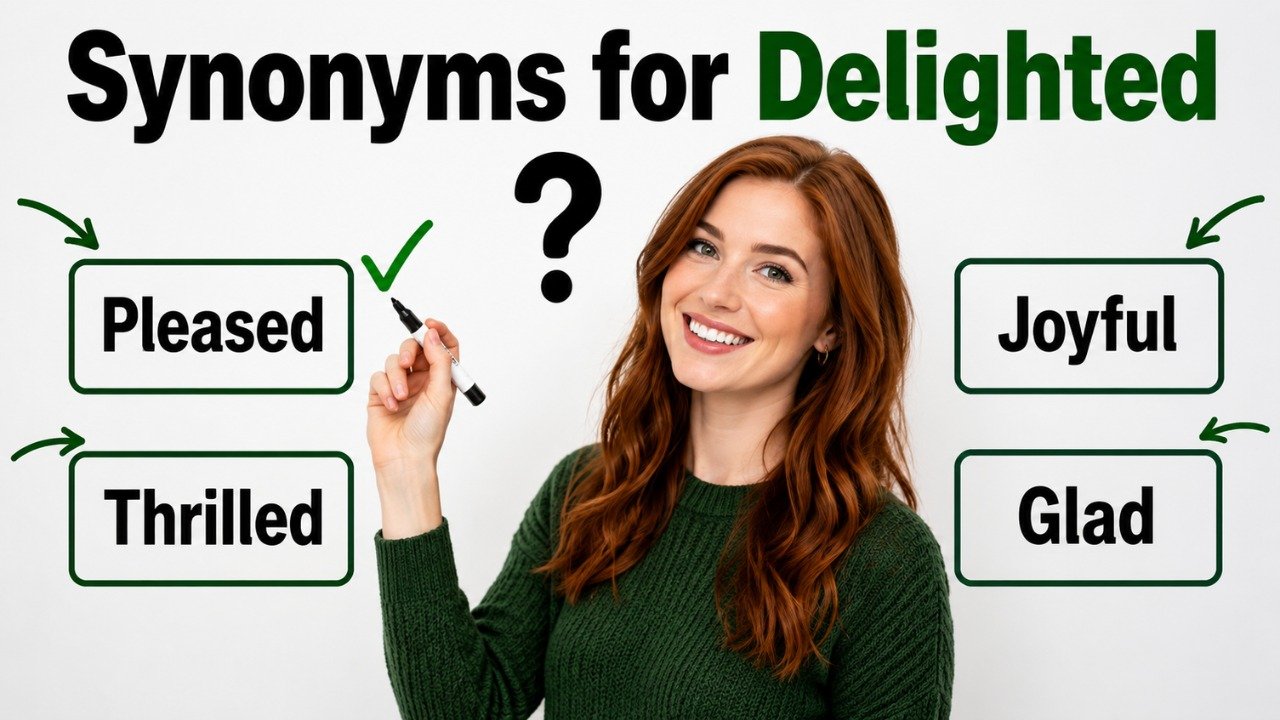
Quick Answer: The best synonyms for delighted include pleased, thrilled, overjoyed, elated, glad, joyful, ecstatic, enchanted, gratified, and jubilant. Use pleased for polite or formal satisfaction, thrilled for energetic excitement, overjoyed for intense happiness, and elated for a major success. Glad works naturally in casual speech, while gratified suits professional achievements. Enchanted describes pleasure mixed with admiration, and ecstatic expresses the strongest level of happiness.
Pronunciation and Word Details
Word: Delighted.
Pronunciation: /dɪˈlaɪtɪd/.
Part of Speech: Adjective.
Meaning: Feeling or showing great happiness, pleasure, satisfaction, or enjoyment.
US Pronunciation:
UK Pronunciation:
What Does “Delighted” Mean?
Delighted means extremely pleased, happy, or satisfied because something enjoyable, welcome, or successful has happened.
The word delighted is mainly used as an adjective. It describes a positive emotional response that is usually stronger than ordinary happiness or satisfaction.
A person may feel delighted after receiving good news, meeting someone special, achieving a goal, receiving a thoughtful gift, or experiencing something beautiful.
Personal Happiness: She was delighted to hear that her sister was visiting.
Professional Satisfaction: The manager was delighted with the team’s progress.
Pleasant Surprise: We were delighted by the unexpected invitation.
Polite Response: I would be delighted to attend the ceremony.
Delighted may describe a temporary emotional reaction rather than a person’s general mood. Someone can be a happy person overall, but feel delighted because of one specific event.
The word can also express politeness. Phrases such as “I would be delighted” sound warm, respectful, and enthusiastic in invitations, offers, and professional communication.
Meaning, Tone, and Context of “Delighted”
Delighted has a positive, warm, and enthusiastic tone. It communicates more pleasure than pleased but may sound less intense than ecstatic or euphoric.
The word is suitable for both formal and conversational English. Its exact strength depends on the context and the surrounding words.
Formal Context: Delighted is commonly used in invitations, announcements, professional messages, speeches, and polite responses.
Conversational Context: It naturally describes happiness about good news, visits, gifts, achievements, and enjoyable experiences.
Emotional Context: The word expresses sincere happiness, pleasure, appreciation, or excitement.
Polite Context: “I would be delighted” communicates willingness in a courteous and enthusiastic way.
Professional Context: It may express satisfaction with results, partnerships, progress, or recognition.
Literary Context: Delighted can describe a character’s joy, fascination, or enchantment.
Strong Tone: Words such as absolutely, truly, deeply, and utterly can make delighted more intense.
Gentle Tone: Delighted may sound refined and controlled when compared with highly emotional words such as ecstatic.
When and How to Use “Delighted”
For Receiving Good News
Use delighted when news creates immediate happiness or pleasure.
Example: She was delighted to learn that her application had been accepted.
For Expressing Polite Willingness
Use “I would be delighted” when accepting an invitation, request, or opportunity warmly.
Example: I would be delighted to speak at the event.
For Celebrating Success
Use delighted when someone feels pleased about an achievement, result, or improvement.
Example: The coach was delighted with the team’s performance.
For Pleasant Surprises
Use delighted when something unexpected creates joy or satisfaction.
Example: We were delighted by the thoughtful welcome.
For Enjoyable Experiences
Use delighted when a visit, meal, performance, or activity gives great pleasure.
Example: The children were delighted by the puppet show.
For Meeting Someone
Use delighted when expressing happiness about meeting, welcoming, or seeing a person.
Example: Her grandparents were delighted to see her again.
For Professional Satisfaction
Use delighted in formal communication when pleased with progress, quality, or cooperation.
Example: The director was delighted with the successful outcome.
For Gifts and Kind Gestures
Use delighted when receiving something thoughtful or meaningful.
Example: He was delighted with the handmade gift.
Best Synonyms for Delighted
Pleased
Synonym: Feeling happy or satisfied about something.
Example: The teacher was pleased with the students’ improvement.
Thrilled
Synonym: Feeling extremely happy and excited.
Example: She was thrilled to receive the scholarship.
Overjoyed
Synonym: Filled with very great happiness.
Example: The family was overjoyed when the missing dog returned.
Elated
Synonym: Extremely happy because of a success or achievement.
Example: He felt elated after winning the competition.
Glad
Synonym: Happy or thankful about a situation.
Example: I am glad that you arrived safely.
Joyful
Synonym: Feeling, expressing, or causing great happiness.
Example: The joyful crowd celebrated the good news.
Ecstatic
Synonym: Experiencing an extremely intense level of happiness.
Example: The supporters were ecstatic about the final result.
Enchanted
Synonym: Delighted and deeply attracted by something charming or beautiful.
Example: The visitors were enchanted by the peaceful garden.
Gratified
Synonym: Pleased because an effort, achievement, or expectation has been recognized or fulfilled.
Example: She was gratified by the positive response to her work.
Jubilant
Synonym: Showing great happiness and celebration after a victory or success.
Example: The players were jubilant after winning the final match.
50 Synonyms for Delighted With Short Meanings
- Pleased: Happy or satisfied with something.
- Thrilled: Extremely happy and excited.
- Overjoyed: Filled with intense happiness.
- Elated: Very happy because of success.
- Glad: Happy or thankful about something.
- Joyful: Full of happiness and positive emotion.
- Ecstatic: Experiencing overwhelming happiness.
- Enchanted: Delighted by beauty, charm, or wonder.
- Charmed: Pleased and attracted by someone or something.
- Gratified: Pleased because expectations or efforts were fulfilled.
- Contented: Peacefully happy and satisfied.
- Satisfied: Pleased because a need or expectation was met.
- Cheerful: Noticeably happy and positive.
- Jubilant: Showing great joy after success.
- Euphoric: Experiencing an unusually intense feeling of happiness.
- Exhilarated: Feeling excited, energetic, and joyful.
- Excited: Enthusiastic and eager about something.
- Blissful: Completely happy and peaceful.
- Gleeful: Showing lively and sometimes playful delight.
- Merry: Cheerful, lively, and full of enjoyment.
- Radiant: Visibly glowing with happiness.
- Beaming: Smiling brightly because of pleasure.
- Buoyant: Cheerful, hopeful, and emotionally lifted.
- Happy: Feeling pleasure, satisfaction, or joy.
- Joyous: Full of great happiness and celebration.
- Rapturous: Expressing extremely enthusiastic pleasure.
- Transported: Overcome with intense pleasure or joy.
- Tickled: Amused and pleased in an informal way.
- Amused: Entertained and pleasantly interested.
- Entertained: Given pleasure or enjoyment.
- Captivated: Strongly attracted and delighted.
- Fascinated: Deeply interested and pleasantly absorbed.
- Impressed: Pleased by someone’s quality, ability, or achievement.
- Appreciative: Feeling pleasure and gratitude.
- Thankful: Pleased and grateful for something received.
- Grateful: Feeling appreciation for kindness or good fortune.
- Rejoicing: Expressing strong happiness or celebration.
- Celebratory: Showing happiness connected with a special success.
- Triumphant: Joyful and proud after victory.
- Fulfilled: Deeply satisfied because an aim was achieved.
- Relieved: Happy because worry or difficulty has ended.
- Heartened: Encouraged and made happier.
- Encouraged: Given hope, confidence, or satisfaction.
- Uplifted: Made happier, more hopeful, or more positive.
- Rapt: Deeply delighted and completely absorbed.
- On Cloud Nine: Extremely happy and excited.
- Walking on Air: Feeling unusually light and joyful.
- In High Spirits: Cheerful, lively, and enthusiastic.
- Full of Joy: Experiencing a strong feeling of happiness.
- Pleased as Punch: Extremely pleased in an informal way.
Read Also:
Synonyms for Grounded

Synonyms for Delighted by Context
When Delighted Means Pleased
Use these synonyms when someone feels satisfied with a result, decision, service, or experience.
Pleased: A flexible alternative suitable for formal and everyday writing.
Example: The client was pleased with the final design.
Satisfied: Best when expectations, requirements, or needs have been met.
Example: The customer was satisfied with the response.
Gratified: Suitable for professional or formal contexts involving effort and recognition.
Example: The researcher was gratified by the interest in her findings.
Contented: Describes calm, peaceful satisfaction rather than active excitement.
Example: He felt contented after completing the day’s work.
Fulfilled: Suggests deep satisfaction after achieving something meaningful.
Example: She felt fulfilled by her work with the community.
When Delighted Means Extremely Happy
Use these alternatives when the emotion is stronger than ordinary pleasure.
Overjoyed: Expresses very great happiness, often after welcome news.
Example: The parents were overjoyed by their daughter’s safe return.
Elated: Often describes happiness caused by success or recognition.
Example: He was elated after receiving the award.
Ecstatic: Communicates an extremely intense emotional reaction.
Example: The audience was ecstatic when the performer returned.
Euphoric: Describes powerful and sometimes overwhelming happiness.
Example: The runners felt euphoric after crossing the finish line.
Blissful: Combines happiness with peace and contentment.
Example: They enjoyed a blissful afternoon beside the lake.
When Delighted Means Excited
Use these synonyms when happiness includes enthusiasm, energy, or anticipation.
Thrilled: A strong and natural word for exciting news or opportunities.
Example: She was thrilled to begin her new position.
Excited: A common alternative for enthusiastic anticipation.
Example: The children were excited about the school trip.
Exhilarated: Suggests energetic happiness after an exciting experience.
Example: He felt exhilarated after completing the difficult climb.
Buoyant: Describes a cheerful and optimistic emotional state.
Example: Her encouraging results left her feeling buoyant.
Jubilant: Best for public celebration after success or victory.
Example: Jubilant supporters filled the streets.
When Delighted Means Charmed
Use these alternatives when beauty, personality, kindness, or atmosphere creates pleasure.
Enchanted: Suggests delight mixed with wonder or admiration.
Example: The guests were enchanted by the musical performance.
Charmed: Describes pleasure caused by someone’s appealing personality or behavior.
Example: Everyone was charmed by the young speaker’s confidence.
Captivated: Suggests complete attention and admiration.
Example: The children were captivated by the storyteller.
Fascinated: Emphasizes strong interest and enjoyment.
Example: She was fascinated by the detailed artwork.
Rapt: Describes complete absorption in something enjoyable.
Example: The audience listened with rapt attention.
When Delighted Means Grateful
Use these words when happiness comes from receiving help, kindness, support, or good fortune.
Grateful: Expresses sincere appreciation.
Example: We are grateful for your generous assistance.
Thankful: Describes relief and appreciation for a positive outcome.
Example: She was thankful that everyone returned safely.
Appreciative: Shows recognition of another person’s effort or kindness.
Example: The residents were appreciative of the volunteers’ support.
Heartened: Describes happiness and renewed hope caused by encouragement.
Example: The team was heartened by the positive feedback.
Relieved: Expresses happiness because worry or danger has ended.
Example: He was relieved to hear that the test results were normal.
When Delighted Sounds Casual
Use these expressions in friendly conversation or informal writing.
Glad: A simple and natural alternative.
Example: I am glad you could join us.
Tickled: Means amused and pleased, often by attention or praise.
Example: She was tickled by the thoughtful compliment.
Pleased as Punch: Expresses strong satisfaction in a playful way.
Example: He was pleased as punch with his new bicycle.
On Cloud Nine: Describes feeling extremely happy.
Example: She has been on cloud nine since receiving the news.
Walking on Air: Suggests a light and joyful feeling after something wonderful.
Example: He was walking on air after the successful interview.
Another Word for Delighted
Pleased is usually the best single replacement for delighted because it works naturally in professional writing, polite communication, and everyday conversation.
However, the strongest alternative depends on the intensity and cause of the emotion. Use thrilled for excitement, overjoyed for deeply emotional happiness, elated for success, enchanted for admiration, and gratified for professional satisfaction.
Original: She was delighted with the final result.
Better Option: She was pleased with the final result.
Original: He was delighted to receive the award.
Better Option: He was elated to receive the award.
Original: The children were delighted by the surprise.
Better Option: The children were thrilled by the surprise.
Original: The visitors were delighted by the beautiful performance.
Better Option: The visitors were enchanted by the beautiful performance.
When Not to Use “Delighted”
Do not use delighted when the emotion is mild, negative, uncertain, or unrelated to happiness. A more precise word may better communicate satisfaction, relief, excitement, gratitude, or amusement.
Avoid repeating delighted several times in the same paragraph. Choose alternatives that identify the exact type and intensity of pleasure.
When the Emotion Is Mild
Delighted may sound too strong when someone is only slightly satisfied.
Weak: She was delighted that the meeting ended on time.
Better: She was pleased that the meeting ended on time.
When the Main Feeling Is Relief
Use relieved when happiness comes from the end of worry, danger, or uncertainty.
Weak: He was delighted that the medical examination found no problem.
Better: He was relieved that the medical examination found no problem.
When the Main Feeling Is Gratitude
Use grateful or thankful when appreciation is more important than excitement.
Weak: We were delighted for your help during the emergency.
Better: We were grateful for your help during the emergency.
When the Main Feeling Is Amusement
Use amused when something is funny or entertaining.
Weak: She was delighted by the clever joke.
Better: She was amused by the clever joke.
When the Emotion Is Extremely Intense
Delighted may sound too controlled for an overwhelming emotional reaction.
Weak: The family was delighted when the lost child was found safely.
Better: The family was overjoyed when the lost child was found safely.
When Writing About General Happiness
Delighted usually responds to a particular event. Happy is often better for a general emotional state.
Weak: He has always been a delighted person.
Better: He has always been a happy person.
Words Commonly Confused With Delighted
Delighted vs Happy: Delighted usually describes strong happiness caused by a specific event. Happy can describe either a temporary feeling or a general emotional state.
Example With Delighted: She was delighted by the surprise visit.
Example With Happy: She is generally happy with her life.
Delighted vs Pleased: Delighted is stronger and more enthusiastic. Pleased often sounds calmer, more controlled, or more formal.
Example With Delighted: We were delighted to hear the wonderful news.
Example With Pleased: We were pleased with the monthly results.
Delighted vs Thrilled: Delighted communicates great pleasure. Thrilled adds stronger excitement and energy.
Example With Delighted: He was delighted with the thoughtful gift.
Example With Thrilled: He was thrilled to join the national team.
Delighted vs Excited: Delighted focuses on present happiness. Excited often includes anticipation about something that will happen.
Example With Delighted: She was delighted by the announcement.
Example With Excited: She was excited about the upcoming event.
Delighted vs Grateful: Delighted means very pleased. Grateful means appreciative because someone provided help, kindness, or a benefit.
Example With Delighted: We were delighted by the beautiful flowers.
Example With Grateful: We were grateful to our neighbor for delivering them.
Delighted vs Satisfied: Delighted expresses emotional pleasure. Satisfied means that expectations, needs, or standards have been met.
Example With Delighted: The audience was delighted by the performance.
Example With Satisfied: The inspector was satisfied that every requirement had been met.
Delighted vs Amused: Delighted expresses broad happiness or pleasure. Amused specifically describes enjoyment caused by something funny or entertaining.
Example With Delighted: The children were delighted by their gifts.
Example With Amused: The children were amused by the clown’s expressions.
Which Synonym Should You Choose?
Choose pleased for professional communication, polite responses, reports, and moderate satisfaction.
Choose thrilled when happiness includes strong excitement about news, travel, opportunities, or achievements.
Choose overjoyed when someone experiences deeply emotional happiness, especially after important news or a reunion.
Choose elated when the happiness follows a victory, achievement, promotion, award, or personal success.
Choose glad for casual conversation, friendly messages, and simple expressions of happiness.
Choose joyful when describing a happy mood, celebration, event, face, voice, or atmosphere.
Choose ecstatic when the emotional reaction is extremely intense and openly expressed.
Choose enchanted when beauty, charm, imagination, or personality creates delight.
Choose charmed when someone is pleased by another person’s attractive behavior or manner.
Choose gratified for formal writing about recognition, progress, achievement, or fulfilled expectations.
Choose satisfied when requirements, expectations, standards, or needs have been met.
Choose contented when the happiness is peaceful, calm, and free from strong excitement.
Choose jubilant for celebrations connected with success, victory, or welcome public news.
Choose exhilarated when the emotion combines joy, excitement, and physical energy.
Choose grateful when happiness is connected with help, kindness, support, or generosity.
Choose relieved when pleasure results from the end of fear, worry, danger, or uncertainty.
Choose amused when someone enjoys something funny, clever, or entertaining.
Choose on cloud nine or walking on air in informal conversation about intense happiness.
Real Life Examples of “Delighted” in Sentences
Original: She was delighted to receive the promotion.
Better Option: She was elated to receive the promotion.
Original: The children were delighted by the surprise party.
Better Option: The children were thrilled by the surprise party.
Original: We were delighted with the quality of the work.
Better Option: We were pleased with the quality of the work.
Original: He was delighted when his family arrived safely.
Better Option: He was relieved when his family arrived safely.
Original: The visitors were delighted by the beautiful gardens.
Better Option: The visitors were enchanted by the beautiful gardens.
Original: Her parents were delighted by her graduation result.
Better Option: Her parents were overjoyed by her graduation result.
Original: The manager was delighted with the positive feedback.
Better Option: The manager was gratified by the positive feedback.
Original: I was delighted that you remembered my birthday.
Better Option: I was touched that you remembered my birthday.
Original: The audience was delighted by the comedian’s stories.
Better Option: The audience was amused by the comedian’s stories.
Original: The players were delighted after winning the championship.
Better Option: The players were jubilant after winning the championship.
Synonym Groups and Usage Differences
General Happiness Group
Happy, glad, pleased, cheerful, and joyful describe positive emotional states with different levels of intensity.
Happy is the broadest word. Glad usually responds to a specific situation. Pleased suggests controlled satisfaction, while joyful communicates stronger and more visible happiness.
Example: She was glad that everyone enjoyed the celebration.
Intense Happiness Group
Overjoyed, ecstatic, euphoric, elated, and rapturous communicate a powerful level of happiness.
Overjoyed is deeply emotional. Elated often follows achievement. Ecstatic and euphoric express overwhelming joy, while rapturous sounds expressive or literary.
Example: The family was overjoyed by the wonderful news.
Excitement Group
Thrilled, excited, exhilarated, buoyant, and jubilant combine happiness with enthusiasm or energy.
Thrilled is common and expressive. Excited often includes anticipation. Exhilarated describes energetic pleasure, while jubilant usually follows victory or success.
Example: The students were thrilled about the upcoming trip.
Satisfaction Group
Pleased, gratified, satisfied, contented, and fulfilled describe happiness created by positive results or completed goals.
Pleased is flexible. Satisfied focuses on expectations being met. Gratified suits formal achievements, and fulfilled suggests deeper personal meaning.
Example: The artist felt fulfilled after completing the project.
Charm and Wonder Group
Enchanted, charmed, captivated, fascinated, and rapt describe pleasure created by beauty, personality, imagination, or interest.
Enchanted suggests wonder. Charmed often describes social appeal. Captivated and rapt emphasize complete attention.
Example: The audience was captivated by the graceful performance.
Gratitude Group
Grateful, thankful, appreciative, heartened, and touched describe positive feelings caused by kindness, help, or encouragement.
Grateful and thankful emphasize appreciation. Appreciative is useful in professional communication. Heartened describes renewed hope.
Example: We were grateful for the thoughtful support.
Visible Happiness Group
Beaming, radiant, cheerful, gleeful, and merry describe happiness that can be seen through expressions or behavior.
Beaming usually refers to a bright smile. Radiant suggests a glowing appearance. Gleeful is lively and playful, while merry suggests cheerful activity.
Example: She entered the room with a radiant smile.
Informal Happiness Group
Tickled, on cloud nine, walking on air, in high spirits, and pleased as punch are conversational alternatives.
These phrases create a friendly and expressive tone. They are suitable for casual speech but may sound inappropriate in formal reports.
Example: He was on cloud nine after receiving the invitation.
Antonyms of Delighted
The opposite of delighted may describe sadness, disappointment, anger, boredom, dissatisfaction, or distress.
Disappointed: Unhappy because expectations were not met.
Displeased: Annoyed or dissatisfied with something.
Unhappy: Not feeling pleasure, satisfaction, or joy.
Saddened: Made emotionally unhappy.
Miserable: Extremely unhappy or uncomfortable.
Dismayed: Distressed or disappointed by an unexpected event.
Upset: Emotionally troubled, unhappy, or worried.
Distressed: Experiencing serious worry, sadness, or discomfort.
Dissatisfied: Unhappy because needs or standards were not met.
Annoyed: Slightly angry or irritated.
Angry: Feeling strong displeasure.
Bored: Uninterested and lacking enjoyment.
Indifferent: Having no strong interest or emotional response.
Depressed: Feeling deeply sad or without hope.
Heartbroken: Experiencing overwhelming emotional pain or sadness.
Comparison: Delighted vs Related Words
Delighted vs Pleased
Delighted communicates stronger happiness and enthusiasm. Pleased is calmer and often better for formal or professional satisfaction.
Example With Delighted: She was delighted to receive the invitation.
Example With Pleased: The supervisor was pleased with the report.
Delighted vs Thrilled
Delighted means very pleased. Thrilled adds energy, anticipation, and excitement.
Example With Delighted: He was delighted with the thoughtful gift.
Example With Thrilled: He was thrilled about the opportunity to travel.
Delighted vs Overjoyed
Delighted expresses great pleasure. Overjoyed suggests a deeper and more emotional level of happiness.
Example With Delighted: She was delighted to see her friend.
Example With Overjoyed: She was overjoyed to see her missing brother return safely.
Delighted vs Elated
Delighted can result from any pleasant experience. Elated usually follows an important achievement, victory, or success.
Example With Delighted: The student was delighted with the kind comments.
Example With Elated: The student was elated after winning the academic prize.
Delighted vs Ecstatic
Delighted is strong but controlled. Ecstatic expresses an overwhelming and highly visible emotional reaction.
Example With Delighted: The guests were delighted by the announcement.
Example With Ecstatic: The supporters were ecstatic after the final victory.
Delighted vs Enchanted
Delighted expresses general pleasure. Enchanted suggests delight mixed with admiration, wonder, or fascination.
Example With Delighted: The visitors were delighted with the tour.
Example With Enchanted: The visitors were enchanted by the ancient garden.
Delighted vs Gratified
Delighted is emotional and flexible. Gratified usually expresses formal satisfaction because effort, recognition, or expectations produced a positive result.
Example With Delighted: She was delighted by the praise.
Example With Gratified: She was gratified that her research received serious attention.
Delighted vs Satisfied
Delighted communicates active happiness. Satisfied means that a requirement, need, or expectation has been met.
Example With Delighted: The family was delighted by the celebration.
Example With Satisfied: The inspector was satisfied with the safety improvements.
Common Phrases and Expressions With Delighted
Absolutely Delighted: Feeling extremely happy or pleased.
Truly Delighted: Experiencing sincere and genuine pleasure.
Deeply Delighted: Feeling strong emotional happiness.
Utterly Delighted: Completely and intensely pleased.
Clearly Delighted: Showing obvious signs of happiness.
Visibly Delighted: Displaying pleasure through expression or behavior.
Delighted With Something: Very pleased with an object, result, or experience.
Delighted by Something: Made happy by a particular event, action, or feature.
Delighted to Meet You: A polite expression of happiness when meeting someone.
Would Be Delighted: A warm and courteous way to accept an invitation or opportunity.
Common Mistakes to Avoid
Confusing Delighted and Delightful
Delighted describes a person who feels pleasure. Delightful describes someone or something that creates pleasure.
Incorrect: The children were delightful with their presents.
Correct: The children were delighted with their presents.
Correct: The presents were delightful.
Using the Wrong Preposition
Use delighted with when referring to an object, result, person, or experience that gives satisfaction.
Example: She was delighted with the final painting.
Use delighted by when emphasizing the action or feature that caused the pleasure.
Example: She was delighted by the artist’s attention to detail.
Use delighted at when reacting to an event, result, or development.
Example: The team was delighted at the sudden improvement.
Use delighted to before a verb.
Example: I am delighted to welcome you.
Using Delighted for Weak Satisfaction
Delighted may sound exaggerated when the reaction is only mild.
Unnatural: He was delighted that the pen worked.
Better: He was pleased that the pen worked.
Using Delighted for General Personality
Delighted usually describes a response to a specific event rather than a permanent personality.
Unnatural: She is a delighted person.
Better: She is a cheerful person.
Repeating Delighted Too Often
Repeated use can make a paragraph sound flat and imprecise.
Repetitive: She was delighted by the gift and delighted by the message.
Better: She was thrilled by the gift and touched by the message.
Choosing an Overly Strong Synonym
Ecstatic, euphoric, and rapturous may sound exaggerated for ordinary satisfaction.
Exaggerated: The customer was euphoric because the order arrived on time.
Better: The customer was pleased because the order arrived on time.
Using Informal Phrases in Formal Writing
Expressions such as on cloud nine and pleased as punch may sound too casual in reports, essays, or professional announcements.
Casual: The director was on cloud nine about the quarterly results.
Formal: The director was delighted with the quarterly results.
Confusing Happiness With Gratitude
Delighted and grateful may appear in similar situations, but their meanings are different.
Delighted: Emphasizes happiness.
Grateful: Emphasizes appreciation for help or kindness.
Example: We were delighted by the successful outcome and grateful to everyone who helped.
Conclusion
The best synonyms for delighted depend on the strength and cause of the emotion. Pleased suits polite and professional satisfaction, while thrilled expresses energetic excitement. Overjoyed and ecstatic communicate intense happiness, elated fits achievement, and enchanted describes pleasure mixed with wonder. Glad works naturally in casual conversation, while gratified and satisfied are useful for results and expectations. Choosing precise synonyms for delighted helps writing sound more expressive, accurate, and appropriate for each situation.
FAQs About Synonyms for Delighted
What Is the Best Synonym for Delighted?
Pleased is the best general synonym for delighted. Thrilled is better for excitement, while overjoyed suits deeply emotional happiness.
What Is a Stronger Word Than Delighted?
Ecstatic, euphoric, overjoyed, and rapturous are stronger alternatives. They describe a more intense or overwhelming level of happiness.
What Is a Formal Synonym for Delighted?
Pleased, gratified, satisfied, elated, and appreciative are useful formal alternatives. Gratified works particularly well when an effort or achievement receives recognition.
What Is a Casual Synonym for Delighted?
Glad, thrilled, tickled, on cloud nine, walking on air, and pleased as punch are natural casual alternatives.
What Is the Difference Between Delighted and Pleased?
Delighted expresses stronger happiness and enthusiasm. Pleased usually describes calmer satisfaction and often sounds more formal or controlled.
Can Delighted Mean Excited?
Yes. Delighted can include excitement, especially when someone receives good news or an opportunity. Thrilled or exhilarated may express that energy more clearly.
What Is the Opposite of Delighted?
Common opposites include disappointed, displeased, unhappy, dissatisfied, saddened, miserable, and dismayed. The best antonym depends on the context.
