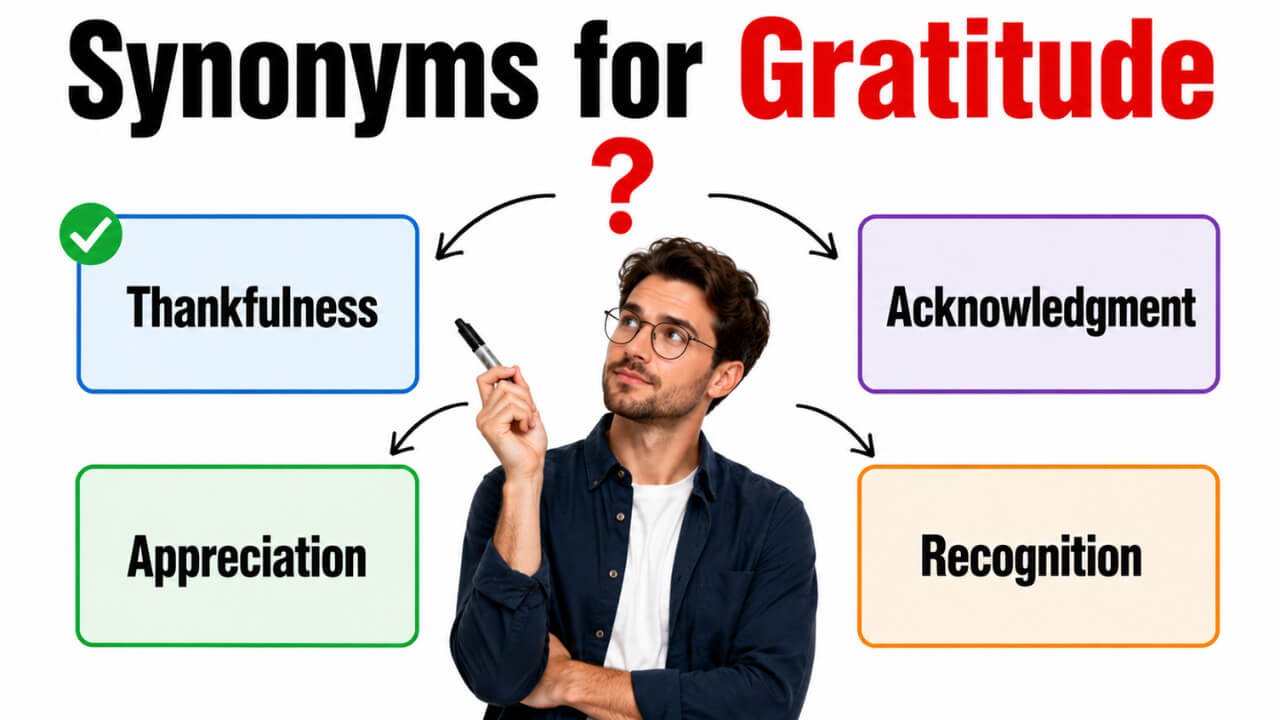
Quick Answer: The best synonyms for gratitude are appreciation, thankfulness, gratefulness, thanks, acknowledgment, recognition, indebtedness, admiration, praise, and regard. Use appreciation for recognizing value or kindness, thankfulness for a personal feeling of being grateful, and thanks for direct everyday expressions. Acknowledgment and recognition suit formal writing, while indebtedness expresses a strong sense of obligation after receiving meaningful help. Admiration, praise, and regard work when gratitude also includes respect for someone’s actions or character.
Pronunciation and Word Details
Word: Gratitude
Pronunciation: /ˈɡræt.ɪ.tuːd/
Part of Speech: Noun
Meaning: A sincere feeling of appreciation for kindness, help, support, or something valuable received.
US Pronunciation:
UK Pronunciation:
What Does “Gratitude” Mean?
Gratitude means a feeling of sincere appreciation for something good that someone has done or provided. It is an uncountable noun commonly used when people recognize kindness, support, generosity, opportunities, or positive experiences.
A person may feel gratitude after receiving help during a difficult situation. Gratitude can also arise from everyday experiences, such as enjoying good health, spending time with loved ones, or receiving thoughtful advice.
The word appears in personal conversations, formal speeches, professional messages, reflective writing, and expressions of thanks. It can describe an internal feeling or an outward expression.
Internal Feeling: She felt deep gratitude for the support she received.
Outward Expression: He expressed his gratitude through a thoughtful message.
Gratitude usually carries more emotional depth than the simple word thanks. Thanks may be brief and conversational, while gratitude often suggests sincere reflection and lasting appreciation.
Meaning, Tone, and Context of “Gratitude”
Gratitude has a positive, sincere, and emotionally meaningful tone. It can sound warm and personal, but it also works naturally in formal and professional writing.
In personal contexts, gratitude expresses heartfelt appreciation for kindness, love, care, or emotional support. It often appears when a person wants to show that another person’s actions had a meaningful effect.
In formal contexts, gratitude may be used in speeches, letters, acknowledgments, ceremonies, and professional messages. It sounds more thoughtful and serious than a simple thank you.
In reflective or spiritual contexts, gratitude may describe an awareness of the positive parts of life. A person may practice gratitude by noticing and appreciating experiences, relationships, abilities, or opportunities.
The word is generally neutral in grammar but emotionally positive in meaning. It is not normally casual, humorous, technical, or negative.
Personal Tone: I feel immense gratitude for your patience and support.
Formal Tone: The committee expressed its gratitude to everyone who contributed.
Reflective Tone: Gratitude helped her focus on the positive parts of her life.
Professional Tone: We wish to express our gratitude for your continued cooperation.
When and How to Use “Gratitude”
For Receiving Help
Use gratitude when someone’s assistance has made a meaningful difference.
Example: She expressed her gratitude to the neighbors who helped during the emergency.
For Emotional Support
Gratitude can communicate appreciation for encouragement, patience, understanding, or care.
Example: He felt deep gratitude for the friends who supported him during a difficult year.
For Formal Appreciation
Use gratitude in speeches, acknowledgments, professional messages, and official statements.
Example: The organizers extended their gratitude to all the volunteers.
For Gifts and Generosity
The word can show appreciation for a thoughtful gift, donation, favor, or generous action.
Example: Maria accepted the gift with genuine gratitude.
For Opportunities
Use gratitude when appreciating a chance to learn, work, participate, or improve.
Example: I approach this new opportunity with excitement and gratitude.
For Everyday Reflection
Gratitude can describe a habit of recognizing positive experiences and valuable relationships.
Example: She begins each morning by thinking about the people who bring gratitude into her life.
For Respectful Communication
The word can make a message sound sincere, thoughtful, and polite.
Example: Please accept my sincere gratitude for your time and guidance.
Best Synonyms for Gratitude
Appreciation
Synonym: Recognition of the value, kindness, or importance of someone or something.
Example: She showed her appreciation by writing a thoughtful note.
Thankfulness
Synonym: A personal feeling of being pleased and grateful for something received.
Example: He spoke with thankfulness about the people who had supported him.
Gratefulness
Synonym: The state or feeling of being grateful.
Example: Her gratefulness was clear from her warm response.
Thanks
Synonym: A direct expression of appreciation.
Example: Please accept my thanks for your quick assistance.
Acknowledgment
Synonym: Recognition of someone’s help, contribution, or importance.
Example: The author included an acknowledgment of everyone who assisted with the project.
Recognition
Synonym: Formal or public appreciation of effort, service, or achievement.
Example: The volunteers received recognition for their valuable work.
Indebtedness
Synonym: A strong feeling of obligation or gratitude after receiving important help.
Example: He felt a lasting sense of indebtedness to the person who had guided him.
Admiration
Synonym: Warm approval and respect for someone’s qualities or actions.
Example: She expressed admiration for his patience and generosity.
Praise
Synonym: Words that communicate approval, appreciation, or admiration.
Example: The team received praise for completing the work successfully.
Regard
Synonym: Respectful appreciation or positive consideration.
Example: He spoke of his former teacher with great regard.
50 Synonyms for Gratitude with Short Meanings
- Appreciation: Recognition of kindness, value, or importance.
- Thankfulness: A sincere feeling of being thankful.
- Gratefulness: The condition of feeling grateful.
- Thanks: A direct expression of appreciation.
- Thanksgiving: An expression or act of giving thanks.
- Acknowledgment: Recognition of help, support, or contribution.
- Recognition: Appreciation shown for effort or achievement.
- Indebtedness: Gratitude combined with a sense of obligation.
- Praise: Positive words showing approval or appreciation.
- Admiration: Warm respect for someone’s qualities or actions.
- Regard: Respectful appreciation for a person or action.
- Respect: Positive consideration based on value or character.
- Esteem: Deep respect and favorable opinion.
- Honor: Respect given for valuable actions or qualities.
- Tribute: An expression showing respect and appreciation.
- Credit: Recognition given for a contribution or achievement.
- Commendation: Formal praise for good work or behavior.
- Approbation: Formal approval or praise.
- Applause: Public approval or enthusiastic appreciation.
- Blessing: Something valuable that produces gratitude or happiness.
- Grace: A feeling of thankful acceptance and kindness.
- Goodwill: Friendly and supportive feelings toward others.
- Warmth: Sincere kindness and emotional appreciation.
- Affection: Warm feelings of care and appreciation.
- Fondness: Gentle affection and positive regard.
- Devotion: Deep loyalty, care, and appreciation.
- Reverence: Deep respect mixed with admiration.
- Humility: Modest recognition of help received from others.
- Contentment: Satisfaction with what one has or experiences.
- Satisfaction: Pleasure resulting from a positive outcome.
- Joy: Strong happiness connected with a valued experience.
- Delight: Great pleasure or appreciative happiness.
- Relief: Thankful comfort after difficulty or worry ends.
- Obligation: A feeling that kindness should be repaid.
- Appreciativeness: The quality of showing appreciation.
- Heartfelt Thanks: Deep and emotionally sincere appreciation.
- Sincere Thanks: Honest and genuine appreciation.
- Deep Appreciation: Strong recognition of kindness or value.
- Warm Thanks: Friendly and emotionally positive appreciation.
- Grateful Acknowledgment: Sincere recognition of help received.
- Thankful Recognition: Appreciation expressed through recognition.
- Grateful Regard: Respect mixed with sincere thankfulness.
- Sincere Appreciation: Honest recognition of support or kindness.
- Profound Gratitude: Extremely deep and meaningful appreciation.
- Public Acknowledgment: Open recognition of someone’s contribution.
- Due Credit: Fair recognition given for work or assistance.
- Grateful Praise: Positive words motivated by thankfulness.
- Humble Thanks: Modest and sincere appreciation.
- Recognition of Support: Appreciation for help or encouragement.
- Appreciation for Kindness: Thankfulness for caring or generous behavior.
Read Also:
Synonyms for Friendly
Synonyms for Gratitude by Context
When Gratitude Means Personal Thankfulness
Thankfulness, gratefulness, heartfelt thanks, sincere thanks, and deep appreciation work well when expressing personal emotions.
Example: She felt deep appreciation for the kindness her family had shown.
Thankfulness often sounds gentle and reflective. Gratefulness is close in meaning to gratitude, although gratitude is usually more natural in polished writing.
When Gratitude Means Formal Appreciation
Acknowledgment, recognition, commendation, tribute, and credit are suitable when appreciation is expressed formally or publicly.
Example: The speaker offered a tribute to everyone who had supported the program.
Acknowledgment is useful when naming a contribution. Recognition works well when effort or achievement receives public attention.
When Gratitude Means Respect
Regard, esteem, admiration, reverence, and respect are useful when thankfulness includes a high opinion of someone.
Example: She spoke with admiration about the mentor who had guided her career.
These words are not exact replacements in every sentence. They focus more on respect than on receiving kindness.
When Gratitude Means Direct Thanks
Thanks, warm thanks, heartfelt thanks, humble thanks, and sincere appreciation are natural in messages and conversations.
Example: Please accept my heartfelt thanks for your generous assistance.
Thanks is the simplest option. Heartfelt thanks and profound gratitude express stronger emotion.
When Gratitude Includes a Sense of Obligation
Indebtedness, obligation, and grateful acknowledgment can describe appreciation combined with a desire to repay someone.
Example: He felt a deep sense of indebtedness to the friends who had helped him recover.
Indebtedness is stronger than gratitude because it suggests that the receiver feels morally or personally obligated.
When Gratitude Comes From Positive Reflection
Contentment, joy, delight, blessing, and appreciation can describe positive feelings connected with valuable experiences.
Example: She looked at her peaceful home with contentment and appreciation.
These alternatives focus on the emotional results of gratitude rather than gratitude itself.
Another Word for Gratitude
Appreciation is usually the best single replacement for gratitude. It works in personal, professional, and formal contexts. However, the best alternative depends on whether the sentence emphasizes emotion, recognition, respect, or direct thanks.
Original: I would like to express my gratitude for your help.
Better Option: I would like to express my appreciation for your help.
Original: She felt gratitude toward everyone who supported her.
Better Option: She felt deep thankfulness toward everyone who supported her.
Original: The organization showed gratitude to its volunteers.
Better Option: The organization gave formal recognition to its volunteers.
Original: He spoke with gratitude about his former teacher.
Better Option: He spoke with admiration and appreciation for his former teacher.
When Not to Use “Gratitude”
Gratitude is meaningful, but it may sound overly formal in brief everyday conversations. A simple thanks often sounds more natural when responding to a small favor.
Weak: I wish to express my profound gratitude for passing me the salt.
Better: Thanks for passing me the salt.
Avoid using gratitude repeatedly in the same paragraph. Repetition can weaken emotional impact and make writing sound unnatural.
Weak: Her gratitude was clear, and she expressed her gratitude through a message of gratitude.
Better: Her appreciation was clear, and she expressed it through a thoughtful message.
Do not use gratitude when the intended meaning is only admiration. A person can admire someone without receiving any kindness or benefit from that person.
Weak: He felt gratitude for the athlete’s remarkable skill.
Better: He felt admiration for the athlete’s remarkable skill.
Avoid gratitude when formal recognition is the main idea.
Weak: The employee received gratitude for ten years of excellent service.
Better: The employee received recognition for ten years of excellent service.
Gratitude may also be too emotional for objective reports. Appreciation, acknowledgment, or recognition can sound more precise.
Weak: The report records our gratitude for the researcher’s contribution.
Better: The report acknowledges the researcher’s contribution.
Words Commonly Confused With Gratitude
Gratitude vs Appreciation: Gratitude is a feeling of thankfulness, while appreciation can also mean recognizing value, quality, or importance.
Gratitude vs Thankfulness: These words are very close, but gratitude often sounds deeper and more formal. Thankfulness commonly describes a personal emotional state.
Gratitude vs Gratefulness: Both describe being grateful. Gratitude is more common and natural in formal writing, while gratefulness emphasizes the state of feeling grateful.
Gratitude vs Indebtedness: Gratitude means appreciation. Indebtedness adds a feeling of obligation or a desire to repay someone.
Gratitude vs Praise: Gratitude responds to kindness or benefit received. Praise expresses approval of someone’s actions, abilities, or achievements.
Gratitude vs Recognition: Gratitude is mainly an emotion. Recognition is an act of publicly or formally acknowledging effort or achievement.
Gratitude vs Admiration: Gratitude comes from appreciating something received. Admiration comes from respecting someone’s qualities, behavior, or achievements.
Gratitude vs Contentment: Gratitude focuses on appreciation. Contentment describes satisfaction and peace with one’s circumstances.
Which Synonym Should You Choose?
Choose appreciation when you need a versatile alternative that works in personal, academic, and professional writing.
Choose thankfulness when describing a gentle or reflective feeling of being thankful.
Choose gratefulness when emphasizing the emotional state of being grateful.
Choose thanks in casual speech, brief messages, and everyday conversations.
Choose acknowledgment when formally recognizing someone’s help, contribution, or influence.
Choose recognition when effort, achievement, or service deserves public attention.
Choose indebtedness when gratitude creates a strong sense of obligation.
Choose admiration when appreciation is based mainly on respect for someone’s character or actions.
Choose praise when expressing approval through positive words.
Choose regard or esteem when gratitude includes lasting respect.
Choose heartfelt thanks when the message should sound emotional and personal.
Choose commendation when formally praising excellent performance or behavior.
Real Life Examples of “Gratitude” in Sentences
Original: She expressed her gratitude for the thoughtful gift.
Better Option: She expressed her appreciation for the thoughtful gift.
Original: He felt gratitude toward the doctor who had helped his family.
Better Option: He felt profound thankfulness toward the doctor who had helped his family.
Original: The manager showed gratitude to the entire team.
Better Option: The manager gave recognition to the entire team.
Original: I offer my gratitude for your patience.
Better Option: I offer my sincere thanks for your patience.
Original: Her gratitude was visible in her smile.
Better Option: Her gratefulness was visible in her smile.
Original: They spoke with gratitude about their former teacher.
Better Option: They spoke with admiration and appreciation for their former teacher.
Original: We wish to express our gratitude to every volunteer.
Better Option: We wish to acknowledge every volunteer’s contribution.
Original: He accepted their help with gratitude.
Better Option: He accepted their help with heartfelt appreciation.
Original: The family felt gratitude after receiving support from the community.
Better Option: The family felt deep appreciation after receiving support from the community.
Original: Her speech was filled with gratitude.
Better Option: Her speech was filled with warm thanks and sincere recognition.
Synonym Groups and Usage Differences
Direct Thanks Group
Thanks, sincere thanks, warm thanks, heartfelt thanks, and humble thanks directly communicate appreciation to another person.
These expressions work naturally in conversations, messages, speeches, and personal notes.
Example: Please accept my sincere thanks for your continued encouragement.
Appreciation Group
Appreciation, gratefulness, thankfulness, and deep appreciation describe the feeling of valuing kindness or support.
Appreciation is the most flexible word in this group. Thankfulness sounds more reflective, while gratefulness focuses on the emotional condition.
Example: She felt deep appreciation for the opportunity to learn.
Recognition Group
Acknowledgment, recognition, credit, and commendation focus on openly identifying someone’s contribution.
These words work well in reports, ceremonies, professional messages, and formal statements.
Example: The final report gave due credit to every contributor.
Respect Group
Admiration, regard, esteem, reverence, and honor connect gratitude with respect.
They are appropriate when the receiver values both the help and the character of the person who provided it.
Example: He remembered his teacher with affection and high regard.
Emotional Warmth Group
Warmth, affection, fondness, joy, and delight describe feelings that may accompany gratitude.
These words do not always replace gratitude directly, but they help express its emotional effect.
Example: She spoke about her childhood memories with warmth and fondness.
Formal Praise Group
Praise, commendation, approbation, tribute, and applause communicate approval or public appreciation.
Use them when the sentence focuses on excellent work, service, behavior, or achievement.
Example: The volunteers received public praise for their dedication.
Antonyms of Gratitude
The opposite of gratitude depends on whether the intended meaning involves thankfulness, recognition, respect, or emotional appreciation.
Ingratitude: Failure to appreciate kindness or help.
Thanklessness: Lack of appreciation for something received.
Ungratefulness: The condition of not feeling or showing gratitude.
Indifference: Lack of interest, concern, or appreciation.
Entitlement: The belief that one deserves benefits without needing to feel thankful.
Resentment: Anger or bitterness about treatment or circumstances.
Disregard: Failure to recognize value, effort, or importance.
Disrespect: Lack of respect or proper consideration.
Neglect: Failure to acknowledge someone’s effort or contribution.
Criticism: Expression of disapproval rather than praise or appreciation.
Comparison of Gratitude and Related Words
Gratitude vs Appreciation
Gratitude is a sincere emotional response to kindness, support, or benefit. Appreciation is broader because it can also describe recognizing the value or quality of an object, idea, skill, or experience.
Example With Gratitude: She felt gratitude toward the friend who helped her.
Example With Appreciation: She developed an appreciation for traditional art.
Gratitude vs Thankfulness
Gratitude and thankfulness are close in meaning. Gratitude often sounds deeper and more polished, while thankfulness sounds personal, gentle, and reflective.
Example With Gratitude: He expressed his gratitude in a formal speech.
Example With Thankfulness: She reflected on the day with quiet thankfulness.
Gratitude vs Thanks
Gratitude names the feeling, while thanks commonly expresses that feeling directly.
Example With Gratitude: Her gratitude grew as she considered everything they had done.
Example With Thanks: She offered her thanks before leaving.
Gratitude vs Acknowledgment
Gratitude is an emotion. Acknowledgment is the act of recognizing a person, contribution, fact, or source of support.
Example With Gratitude: I feel sincere gratitude for your guidance.
Example With Acknowledgment: The report includes an acknowledgment of your guidance.
Gratitude vs Recognition
Gratitude focuses on appreciation for something received. Recognition focuses on giving attention or credit for effort and achievement.
Example With Gratitude: The family expressed gratitude for the assistance.
Example With Recognition: The worker received recognition for outstanding service.
Gratitude vs Indebtedness
Gratitude is positive appreciation without necessarily creating an obligation. Indebtedness suggests that the receiver feels a duty to repay the kindness.
Example With Gratitude: She felt gratitude for his thoughtful advice.
Example With Indebtedness: She felt indebtedness after he paid all her expenses.
Common Phrases and Expressions With Gratitude
Express Gratitude: Communicate sincere appreciation.
Show Gratitude: Demonstrate thankfulness through words or actions.
Feel Gratitude: Experience a sense of appreciation.
Deep Gratitude: Strong and emotionally meaningful thankfulness.
Sincere Gratitude: Honest and genuine appreciation.
Profound Gratitude: Extremely deep appreciation.
Immense Gratitude: A very large amount of thankfulness.
Heartfelt Gratitude: Appreciation that comes from sincere emotion.
A Sense of Gratitude: An awareness or feeling of thankfulness.
With Gratitude: A polite closing or expression of appreciation.
Common Mistakes to Avoid
One common mistake is treating every positive emotion as a synonym for gratitude. Words such as happiness, love, and excitement may accompany gratitude, but they do not always carry the same meaning.
Avoid choosing admiration when the sentence is about receiving help. Admiration describes respect for someone’s qualities, while gratitude describes appreciation for kindness or benefit.
Do not use indebtedness unless the sentence includes a genuine sense of obligation. It is stronger than gratitude and may suggest that repayment is expected.
Avoid repeating gratitude in every sentence. Use appreciation, thanks, acknowledgment, or recognition when they fit the intended context.
Be careful with the phrase grateful gratitude because it repeats the same idea unnaturally.
Unnatural: She expressed her grateful gratitude for the support.
Natural: She expressed her sincere gratitude for the support.
Do not confuse gratitude with gratification. Gratification usually means pleasure or satisfaction, not thankfulness.
Choose synonyms according to meaning rather than variety alone. The most precise word is more useful than an impressive word that changes the sentence’s intended message.
Conclusion
The most useful synonyms for gratitude include appreciation, thankfulness, gratefulness, thanks, acknowledgment, recognition, indebtedness, admiration, praise, and regard. Appreciation is the strongest general replacement, while thanks works best in casual communication. Use acknowledgment or recognition in formal contexts, indebtedness when appreciation includes obligation, and heartfelt thanks for emotional messages. Understanding these differences helps you select natural vocabulary that communicates sincere appreciation without sounding repetitive, vague, or overly formal.
FAQs About Synonyms for Gratitude
What Is the Best Synonym for Gratitude?
Appreciation is usually the best synonym because it works naturally in personal, formal, and professional contexts.
Are Gratitude and Thankfulness the Same?
They are very similar. Gratitude often sounds deeper and more formal, while thankfulness usually sounds personal and reflective.
What Is a Formal Word for Gratitude?
Acknowledgment, recognition, appreciation, and indebtedness are useful formal alternatives, depending on the intended meaning.
What Is a Stronger Word Than Gratitude?
Profound appreciation or heartfelt gratitude can express a stronger and more emotional sense of thankfulness.
Can Thanks Replace Gratitude?
Thanks can replace gratitude in casual messages and conversations. It may sound too brief when deep emotion or formal appreciation is intended.
What Is the Difference Between Gratitude and Appreciation?
Gratitude usually responds to kindness or benefit received. Appreciation can also mean recognizing the value, beauty, quality, or importance of something.
What Is the Opposite of Gratitude?
Ingratitude, thanklessness, ungratefulness, indifference, and entitlement are common opposites of gratitude.
