
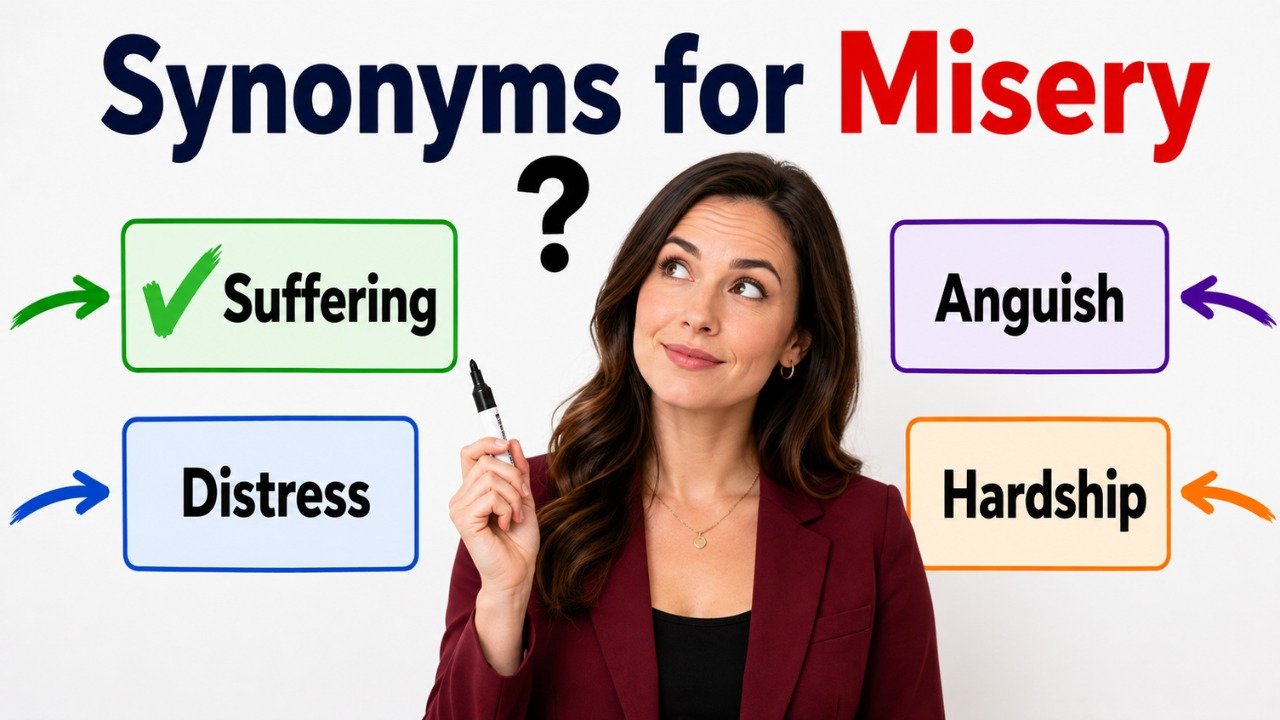
Quick Answer: The best synonyms for misery include suffering, anguish, agony, distress, despair, sorrow, grief, wretchedness, torment, and hardship. Use suffering as the broadest replacement for physical or emotional pain. Choose anguish or agony for intense suffering, distress for serious worry or discomfort, despair for complete loss of hope, sorrow or grief for sadness after loss, hardship for difficult circumstances, and wretchedness for an extremely unhappy or unpleasant condition.
Pronunciation and Word Details
Word: Misery
Pronunciation: /ˈmɪzəri/
Part of Speech: Noun
Meaning: A state of intense unhappiness, suffering, discomfort, or hardship.
US Pronunciation:
UK Pronunciation:
What Does “Misery” Mean?
Misery means severe unhappiness, emotional pain, physical suffering, or an extremely difficult condition.
Misery is primarily used as a noun. It can describe a person’s emotional state, such as deep sadness or despair. It can also refer to physical pain, poverty, discomfort, oppression, or prolonged hardship.
In emotional contexts, misery may describe intense unhappiness caused by loneliness, disappointment, grief, or hopelessness.
In physical contexts, it may describe severe pain, illness, exhaustion, or uncomfortable conditions.
In social and economic contexts, misery may refer to poverty, poor living conditions, hunger, injustice, or constant hardship.
The word can also be used informally for an experience that is extremely unpleasant.
Example: The long journey in freezing rain was complete misery.
Meaning, Tone, and Context of “Misery”
Misery has a strong, negative, and emotional tone. It suggests more than ordinary sadness or temporary discomfort.
The word is common in everyday conversation, emotional writing, literature, journalism, historical discussions, and descriptions of difficult living conditions. It may sound dramatic when used for a minor inconvenience.
In formal writing, misery is appropriate when describing serious human suffering, poverty, conflict, oppression, or prolonged distress. More precise alternatives such as hardship, deprivation, anguish, or despair may sometimes communicate the exact meaning more clearly.
In personal writing, misery can express emotional pain, loneliness, heartbreak, frustration, or a feeling that life has become unbearable.
In casual speech, people sometimes use misery for unpleasant but less serious experiences.
Example: Sitting in wet clothes for three hours was misery.
The intensity of the word means it should be chosen carefully. A small disappointment may cause sadness or frustration, while misery usually suggests deeper or longer lasting suffering.
When and How to Use “Misery”
For Emotional Suffering
Use misery when someone is experiencing deep and prolonged unhappiness.
Example: She lived in misery after losing the relationship that had meant so much to her.
For Grief and Loss
Use misery when sorrow caused by death, separation, or serious loss becomes overwhelming.
Example: The sudden loss left the family in profound misery.
For Hopelessness
Use misery when a person feels trapped in pain and cannot see a positive future.
Example: Years of rejection pushed him into misery and despair.
For Physical Pain
Use misery when pain, illness, exhaustion, or discomfort causes intense suffering.
Example: The untreated injury caused weeks of misery.
For Difficult Living Conditions
Use misery when people experience poverty, hunger, unsafe housing, or severe deprivation.
Example: The families endured years of misery in overcrowded and unhealthy conditions.
For Hardship
Use misery when difficult circumstances create prolonged emotional or practical suffering.
Example: The failed harvest brought misery to the entire region.
For an Unpleasant Experience
Use misery informally when an experience is extremely uncomfortable or frustrating.
Example: The delayed journey became five hours of complete misery.
For Causing Unhappiness
Use misery when someone or something repeatedly causes distress.
Example: The constant noise caused misery for everyone living nearby.
Best Synonyms for Misery
Suffering: Physical or emotional pain experienced over time.
Example: The treatment helped reduce his suffering.
Anguish: Extreme emotional or mental pain.
Example: She cried out in anguish when she heard the news.
Agony: Intense physical or emotional pain.
Example: He was in agony after injuring his back.
Distress: Serious worry, pain, or emotional discomfort.
Example: The sudden change caused considerable distress.
Despair: A complete loss of hope.
Example: She refused to surrender to despair.
Sorrow: Deep sadness, especially after disappointment or loss.
Example: His voice was filled with sorrow.
Grief: Intense sadness caused by death or another major loss.
Example: The family needed time to process its grief.
Wretchedness: A state of extreme unhappiness or poor living conditions.
Example: The novel describes the wretchedness of life in the overcrowded settlement.
Torment: Severe physical or emotional suffering that feels continuous.
Example: The unanswered questions became a source of torment.
Hardship: A difficult condition involving struggle, deprivation, or suffering.
Example: The community survived years of hardship.
50 Synonyms for Misery with Short Meanings
- Suffering: Physical or emotional pain.
- Anguish: Extreme mental or emotional pain.
- Agony: Severe physical or emotional suffering.
- Distress: Serious worry, pain, or discomfort.
- Despair: Complete loss of hope.
- Sorrow: Deep sadness caused by loss or disappointment.
- Grief: Intense sadness following a major loss.
- Sadness: A general state of unhappiness.
- Unhappiness: The condition of not feeling happy or satisfied.
- Wretchedness: Extreme unhappiness or a miserable condition.
- Torment: Severe and continuing physical or emotional pain.
- Affliction: A condition that causes pain or suffering.
- Hardship: A difficult situation involving struggle or deprivation.
- Adversity: Serious difficulty or misfortune.
- Tribulation: A period of great trouble or suffering.
- Desolation: Deep loneliness, sadness, or emotional emptiness.
- Dejection: A low and discouraged emotional state.
- Gloom: A feeling of sadness and lack of hope.
- Melancholy: Quiet, thoughtful, or prolonged sadness.
- Heartache: Deep emotional pain caused by loss or disappointment.
- Heartbreak: Intense emotional suffering after loss or rejection.
- Pain: Physical or emotional suffering.
- Woe: Great sadness, trouble, or distress.
- Despondency: A state of deep discouragement and lost hope.
- Hopelessness: The feeling that improvement is impossible.
- Desperation: Extreme distress caused by a lack of options.
- Dismay: Sudden distress caused by an unexpected problem.
- Discontent: Dissatisfaction with a situation or condition.
- Malaise: A general feeling of discomfort or unhappiness.
- Misfortune: An unlucky event or difficult circumstance.
- Trouble: A problem or situation that causes worry or suffering.
- Calamity: A disastrous event that causes great suffering.
- Ordeal: A painful, frightening, or difficult experience.
- Plight: A serious and unfortunate situation.
- Privation: A lack of basic needs or comforts.
- Destitution: Extreme poverty and lack of necessities.
- Squalor: Filthy and extremely poor living conditions.
- Poverty: The condition of lacking sufficient money or resources.
- Oppression: Cruel or unfair treatment that causes suffering.
- Burden: A difficult responsibility or emotional weight.
- Struggle: A prolonged effort against difficulty or pain.
- Sorrowfulness: The quality of being deeply sad.
- Woefulness: A state of great sadness or distress.
- Bleakness: A condition lacking hope, comfort, or happiness.
- Joylessness: The complete absence of pleasure or happiness.
- Cheerlessness: A state lacking optimism or positive feeling.
- Abjection: A condition of extreme suffering, humiliation, or degradation.
- Demoralization: Loss of confidence, courage, or hope.
- Disheartenment: A feeling of discouragement or reduced hope.
- Discontentment: A state of dissatisfaction and unhappiness.
Read Also:
Synonyms for Quick Learner

Synonyms for Misery by Context
When Misery Means Emotional Suffering
Suffering, anguish, torment, distress, agony, and heartache describe serious emotional pain.
Suffering: The broadest alternative for emotional or physical pain.
Example: Years of separation caused considerable suffering.
Anguish: Best for extreme emotional pain that feels overwhelming.
Example: She waited in anguish for news of her missing brother.
Torment: Best when emotional pain feels continuous or impossible to escape.
Example: Regret became a daily torment.
Distress: Best for serious worry, fear, or emotional discomfort.
Example: The uncertainty caused visible distress.
Heartache: Best for emotional pain caused by love, separation, or disappointment.
Example: The end of the friendship brought lasting heartache.
When Misery Means Deep Sadness
Sorrow, sadness, grief, melancholy, gloom, dejection, and desolation describe different forms of sadness.
Sorrow: A strong but broad word for deep sadness.
Example: Her expression revealed great sorrow.
Grief: Best for sadness caused by death or another major loss.
Example: Everyone experiences grief differently.
Melancholy: Best for quiet, reflective, or lingering sadness.
Example: A feeling of melancholy filled the empty house.
Gloom: Best for a dark, pessimistic, or hopeless mood.
Example: The disappointing results created an atmosphere of gloom.
Dejection: Best when someone feels discouraged after failure or rejection.
Example: He walked away in dejection after receiving the decision.
Desolation: Best for sadness combined with loneliness and emptiness.
Example: She felt complete desolation after everyone had left.
When Misery Means Loss of Hope
Despair, hopelessness, despondency, desperation, bleakness, and demoralization describe suffering connected with lost hope.
Despair: The strongest general word for complete loss of hope.
Example: Even in despair, he continued searching for a solution.
Hopelessness: Best when a person believes that improvement is impossible.
Example: Repeated failures created a feeling of hopelessness.
Despondency: Best for deep discouragement and low spirits.
Example: Her despondency became noticeable after the rejection.
Desperation: Best when extreme distress leads someone to take urgent action.
Example: In desperation, they asked strangers for assistance.
Demoralization: Best for the loss of courage, confidence, or motivation.
Example: Constant criticism caused widespread demoralization among the workers.
When Misery Means Hardship
Hardship, adversity, tribulation, struggle, trouble, ordeal, and plight describe difficult experiences or circumstances.
Hardship: Best for prolonged practical, financial, or personal difficulty.
Example: The family faced great hardship during the winter.
Adversity: A formal alternative for serious challenges or unfavorable circumstances.
Example: She showed courage in the face of adversity.
Tribulation: A literary or formal word for a period of suffering and trouble.
Example: They remained united through every tribulation.
Struggle: Best for an ongoing effort against difficulty.
Example: His struggle to rebuild his life lasted several years.
Ordeal: Best for one especially painful or frightening experience.
Example: Being trapped overnight was a terrifying ordeal.
Plight: Best for describing someone’s serious and unfortunate situation.
Example: The report drew attention to the plight of displaced families.
When Misery Means Physical Pain
Agony, pain, suffering, affliction, torment, and distress can describe physical discomfort.
Agony: Best for extremely severe physical pain.
Example: The injured runner was in agony.
Pain: The clearest and most direct word for physical suffering.
Example: The medication reduced the pain.
Affliction: Best for an illness, condition, or problem that causes prolonged suffering.
Example: The condition was a painful affliction.
Torment: Best when physical pain is severe and continuous.
Example: The untreated wound caused constant torment.
Distress: Best when pain is accompanied by fear, breathing difficulty, or visible discomfort.
Example: The patient showed signs of distress.
When Misery Means Poverty or Deprivation
Destitution, poverty, privation, squalor, wretchedness, and hardship describe suffering caused by poor living conditions.
Destitution: Best for extreme poverty with few or no basic necessities.
Example: The loss of work pushed the household into destitution.
Poverty: The standard word for lacking sufficient financial resources.
Example: The program was designed to reduce poverty.
Privation: Best for the absence of food, shelter, comfort, or other necessities.
Example: The population endured years of severe privation.
Squalor: Best for dirty, unhealthy, and neglected living conditions.
Example: Many residents were forced to live in squalor.
Wretchedness: Best for a combination of poverty, discomfort, and unhappiness.
Example: The account reveals the wretchedness of the workers’ living conditions.
When Misery Means a Difficult Experience
Ordeal, trouble, calamity, misfortune, burden, and struggle describe experiences that produce suffering.
Ordeal: A painful or frightening experience that must be endured.
Example: The emergency became a long and exhausting ordeal.
Trouble: A broad and less intense word for problems or difficulties.
Example: Financial trouble placed pressure on the family.
Calamity: Best for a disastrous event that affects many people.
Example: The flood was a national calamity.
Misfortune: Best for an unlucky event or unfavorable turn of events.
Example: One misfortune followed another.
Burden: Best for a responsibility, worry, or emotional weight that is difficult to carry.
Example: Keeping the secret became a heavy burden.
Another Word for Misery
The best single replacement for misery is usually suffering. It is broad, natural, and suitable for emotional pain, physical pain, hardship, and difficult living conditions.
However, the strongest alternative depends on the sentence. Anguish suits intense emotional pain, agony suits severe physical or emotional pain, despair emphasizes lost hope, grief relates to major loss, and hardship describes difficult circumstances.
Original: The illness caused months of misery.
Better Option: The illness caused months of suffering.
Original: She cried in misery after hearing the news.
Better Option: She cried in anguish after hearing the news.
Original: He fell into misery after losing all hope.
Better Option: He fell into despair after losing all hope.
Original: The community lived in misery after the disaster.
Better Option: The community endured severe hardship after the disaster.
When Not to Use “Misery”
Do not use misery when the situation involves only mild disappointment, temporary annoyance, or ordinary discomfort. The word can sound exaggerated when the problem is minor.
Use a more precise term when the source of suffering is clear. Grief may be better for bereavement, agony for extreme pain, poverty for financial deprivation, and despair for loss of hope.
Avoid repeating misery throughout a paragraph. Different synonyms can clarify whether the suffering is emotional, physical, social, or financial.
Do not use misery as an exact replacement for a medical or psychological condition. Use the correct and specific term when discussing a diagnosed condition.
Weak: Missing the bus caused unbearable misery.
Better: Missing the bus caused considerable frustration.
Weak: She experienced misery after the death of her mother.
Better: She experienced profound grief after the death of her mother.
Weak: The broken bone caused emotional misery.
Better: The broken bone caused intense physical agony.
Weak: The families experienced misery because they had no food or shelter.
Better: The families experienced severe deprivation because they had no food or shelter.
Weak: The disappointing score filled him with misery for several minutes.
Better: The disappointing score left him feeling discouraged.
Words Commonly Confused With Misery
Misery vs Sadness: Sadness can be mild or temporary. Misery is stronger and often suggests intense or prolonged unhappiness.
Misery vs Suffering: Suffering is broader and may be physical, emotional, social, or spiritual. Misery often emphasizes the unhappy emotional experience caused by suffering.
Misery vs Grief: Grief is specifically connected with death, separation, or major loss. Misery can have many causes, including pain, poverty, loneliness, and hardship.
Misery vs Despair: Misery describes severe unhappiness or suffering. Despair specifically means complete loss of hope.
Misery vs Anguish: Misery may describe an ongoing condition. Anguish usually refers to extremely intense emotional pain at a particular time.
Misery vs Agony: Agony emphasizes extreme physical or emotional pain. Misery may include pain, sadness, discomfort, hopelessness, and poor conditions.
Misery vs Hardship: Hardship describes difficult circumstances. Misery describes the suffering or unhappiness those circumstances may cause.
Misery vs Melancholy: Melancholy is quiet, reflective, or lingering sadness. Misery is usually stronger, harsher, and more painful.
Misery vs Depression: Misery is a general word for intense unhappiness. Depression can refer to a serious medical condition and should not automatically be treated as an exact synonym.
Misery vs Wretchedness: Both words describe extreme unhappiness. Wretchedness can also emphasize terrible, degrading, or unhealthy living conditions.
Which Synonym Should You Choose?
Choose suffering as the broadest replacement for physical or emotional misery.
Choose anguish when describing overwhelming emotional pain.
Choose agony when the pain is extremely intense and may be physical or emotional.
Choose distress for serious worry, fear, discomfort, or emotional upset.
Choose despair when someone has lost all hope.
Choose grief when sadness follows death, separation, or another major loss.
Choose sorrow for deep sadness in formal, emotional, or literary writing.
Choose sadness when the emotion is less severe or more general.
Choose hardship when describing prolonged practical or financial difficulty.
Choose adversity for formal writing about difficult circumstances.
Choose torment when pain feels constant, cruel, or impossible to escape.
Choose ordeal for one painful, frightening, or exhausting experience.
Choose plight when drawing attention to another person’s difficult situation.
Choose destitution when describing extreme poverty.
Choose privation when people lack food, shelter, comfort, or basic necessities.
Choose squalor when the focus is on filthy and neglected living conditions.
Choose melancholy for gentle, reflective, or lingering sadness.
Choose heartache for emotional pain caused by love, separation, or disappointment.
Choose despondency for deep discouragement and low spirits.
Choose wretchedness for an extremely unhappy, unpleasant, or degrading condition.
Real Life Examples of “Misery” in Sentences
Original: The severe toothache caused three days of misery.
Better Option: The severe toothache caused three days of agony.
Original: She lived in misery after the relationship ended.
Better Option: She lived with deep heartache after the relationship ended.
Original: The family experienced misery after losing its home.
Better Option: The family experienced severe hardship after losing its home.
Original: His face showed the misery he was feeling.
Better Option: His face showed the anguish he was feeling.
Original: The long period of unemployment brought misery to the household.
Better Option: The long period of unemployment brought hardship to the household.
Original: The abandoned animal was clearly in misery.
Better Option: The abandoned animal was clearly in distress.
Original: The news filled her with misery.
Better Option: The news filled her with sorrow.
Original: The injured player cried out in misery.
Better Option: The injured player cried out in agony.
Original: The prisoners endured years of misery.
Better Option: The prisoners endured years of suffering.
Original: He sank into misery when every attempt failed.
Better Option: He sank into despair when every attempt failed.
Synonym Groups and Usage Differences
Emotional Pain Group
Anguish, heartache, heartbreak, torment, distress, and sorrow describe emotional suffering.
Anguish is intense and immediate. Heartache and heartbreak often relate to love, loss, or rejection. Torment suggests continuing pain, while sorrow is a broader and often more dignified expression of sadness.
Example: The separation caused both parents intense anguish.
Sadness Group
Sadness, melancholy, gloom, dejection, sorrowfulness, and cheerlessness describe low emotional states.
Sadness is the broadest word. Melancholy is quiet and reflective. Gloom suggests pessimism, while dejection often follows rejection or failure.
Example: A mood of gloom settled over the group after the announcement.
Hopelessness Group
Despair, despondency, hopelessness, bleakness, desperation, and demoralization describe a loss of hope or confidence.
Despair is the strongest general term. Despondency suggests a prolonged low mood. Desperation may lead to urgent or extreme action, while demoralization involves losing courage or motivation.
Example: Repeated setbacks created a growing sense of hopelessness.
Physical Pain Group
Agony, pain, affliction, suffering, distress, and torment describe bodily discomfort.
Pain is direct and neutral. Agony is extremely intense. Affliction often refers to a condition that causes prolonged suffering.
Example: The medication finally relieved his pain.
Hardship Group
Hardship, adversity, struggle, tribulation, trouble, and ordeal describe difficult circumstances.
Hardship and struggle often continue over time. Ordeal usually describes one difficult event. Adversity is common in formal and motivational writing.
Example: The business survived a period of severe adversity.
Poverty Group
Poverty, destitution, privation, squalor, and wretchedness describe difficult material conditions.
Poverty refers to limited financial resources. Destitution is more extreme. Privation focuses on missing necessities, while squalor describes filthy and unhealthy surroundings.
Example: Many families faced hunger and destitution.
Disaster Group
Calamity, misfortune, trouble, plight, and adversity describe events or conditions that cause suffering.
Calamity usually affects many people and causes major damage. Misfortune may be personal and accidental. Plight focuses attention on someone’s serious condition.
Example: The storm became a calamity for the coastal communities.
Dissatisfaction Group
Discontent, discontentment, malaise, joylessness, and disheartenment describe less direct forms of unhappiness.
Discontent refers to dissatisfaction. Malaise is a vague feeling that something is wrong. Disheartenment describes lost enthusiasm or courage.
Example: Growing discontent led many workers to demand change.
Antonyms of Misery
The opposite of misery may refer to happiness, comfort, hope, relief, security, or prosperity.
Happiness: A state of pleasure and satisfaction.
Joy: A strong feeling of happiness.
Delight: Great pleasure or enjoyment.
Contentment: Peaceful satisfaction with one’s circumstances.
Comfort: Physical or emotional ease.
Relief: The ending or reduction of pain, worry, or difficulty.
Pleasure: A feeling of enjoyment or satisfaction.
Hope: Confidence that something positive may happen.
Cheerfulness: A bright and positive emotional state.
Wellbeing: A state of health, comfort, and happiness.
Peace: Freedom from conflict, fear, or distress.
Security: A condition of safety and stability.
Prosperity: A state of financial success and wellbeing.
Ease: Freedom from difficulty, discomfort, or effort.
Fulfillment: Satisfaction gained from achieving something meaningful.
Comparison: Misery vs Related Words
Misery vs Suffering
Misery emphasizes intense unhappiness and the emotional experience of pain. Suffering is broader and can refer to physical, emotional, financial, or social pain.
Example With Misery: Loneliness filled his days with misery.
Example With Suffering: The treatment reduced his physical suffering.
Misery vs Anguish
Misery may be a prolonged unhappy condition. Anguish is a sudden or intense experience of emotional pain.
Example With Misery: She endured years of misery in the unhappy household.
Example With Anguish: She cried out in anguish when she received the news.
Misery vs Agony
Misery includes unhappiness, discomfort, hardship, or pain. Agony describes pain at its most severe.
Example With Misery: The long illness caused months of misery.
Example With Agony: The sudden movement sent a wave of agony through his leg.
Misery vs Despair
Misery means severe suffering or unhappiness. Despair means that all hope has been lost.
Example With Misery: The poor conditions caused widespread misery.
Example With Despair: After every plan failed, he gave in to despair.
Misery vs Grief
Misery may have many causes. Grief is specifically associated with death, separation, or major personal loss.
Example With Misery: Constant conflict made life a misery.
Example With Grief: She sought support while coping with grief.
Misery vs Sadness
Sadness can be mild, temporary, or ordinary. Misery is more severe and may last for a long time.
Example With Misery: Isolation caused profound misery.
Example With Sadness: She felt sadness when the holiday ended.
Misery vs Hardship
Misery is the emotional or physical suffering someone experiences. Hardship is the difficult circumstance that may cause it.
Example With Misery: The bitter cold added to their misery.
Example With Hardship: The loss of income created financial hardship.
Misery vs Melancholy
Misery is intense and painful. Melancholy is quieter, gentler, and often more reflective.
Example With Misery: The terrible conditions left him in misery.
Example With Melancholy: The old photographs filled her with melancholy.
Misery vs Wretchedness
Misery describes severe unhappiness or suffering. Wretchedness often suggests extreme poverty, degradation, discomfort, or hopelessness.
Example With Misery: The injury caused weeks of misery.
Example With Wretchedness: The account exposed the wretchedness of the living conditions.
Common Phrases and Expressions With Misery
Cause Misery: Create serious unhappiness or suffering.
Example: The constant uncertainty caused misery for the entire family.
Live in Misery: Experience ongoing unhappiness or painful conditions.
Example: No one should be forced to live in misery.
Abject Misery: Extreme and degrading unhappiness or suffering.
Example: The refugees were left in abject misery.
Sheer Misery: Complete or intense suffering.
Example: The final hours of the journey were sheer misery.
Human Misery: Suffering experienced by people, especially on a large scale.
Example: The conflict created widespread human misery.
Depths of Misery: The most intense level of unhappiness.
Example: He fell into the depths of misery after the loss.
Escape Misery: Get away from painful circumstances.
Example: The family moved away hoping to escape misery.
End the Misery: Stop a painful or extremely unpleasant situation.
Example: A successful treatment finally ended the misery.
Put Someone Out of Their Misery: End someone’s uncertainty or prolonged distress by revealing information or taking action.
Example: She put him out of his misery and told him that he had passed.
Misery Loves Company: An expression suggesting that unhappy people may seek others who share their unhappiness.
Example: He continued complaining because misery loves company.
Common Mistakes to Avoid
Using Misery for Minor Problems
Misery is a strong word. It may sound exaggerated when describing a small inconvenience.
Unnatural: Waiting ten minutes was unbearable misery.
Better: Waiting ten minutes was mildly frustrating.
Confusing Misery With Grief
Grief is more precise when the sadness follows death or major loss.
Vague: She felt misery after her husband died.
Better: She experienced profound grief after her husband died.
Confusing Misery With Despair
Despair involves loss of hope, while misery describes severe unhappiness or suffering.
Unclear: He felt misery because he believed nothing could improve.
Better: He felt despair because he believed nothing could improve.
Confusing Misery With Physical Agony
Use agony when emphasizing extreme physical pain.
Less Precise: The broken bone caused misery.
Better: The broken bone caused intense agony.
Using Misery as a Countable Noun Incorrectly
Misery is usually uncountable when it means severe suffering or unhappiness.
Incorrect: She experienced a misery after the accident.
Better: She experienced misery after the accident.
The plural form miseries can be used when referring to several sources or types of suffering.
Correct: The book describes the miseries of war.
Repeating Misery Too Often
Repeated use can make writing sound vague and emotionally excessive.
Repetitive: Poverty caused misery, illness added misery, and isolation deepened the misery.
Better: Poverty created hardship, illness caused suffering, and isolation deepened the despair.
Choosing a Synonym That Is Too Weak
Sadness may not communicate the intensity of misery.
Weak: The prisoners experienced sadness for many years.
Better: The prisoners endured suffering for many years.
Choosing a Synonym That Is Too Strong
Agony or torment may sound excessive when the feeling is mild.
Exaggerated: She felt agony when the meeting was delayed.
Better: She felt frustration when the meeting was delayed.
Using Depression as an Automatic Synonym
Depression may refer to a medical condition. It should not be used casually as a direct substitute for every form of misery or sadness.
Unclear: The uncomfortable trip caused depression.
Better: The uncomfortable trip caused distress and exhaustion.
Conclusion
Understanding synonyms for misery helps you describe emotional pain, physical suffering, hardship, poverty, and hopelessness with greater accuracy. Suffering is the broadest alternative, while anguish and agony express intense pain. Choose grief for major loss, despair for lost hope, hardship for difficult circumstances, and wretchedness for extremely poor or unhappy conditions. The best synonym depends on the cause, intensity, duration, and type of suffering being described.
FAQs About Synonyms for Misery
What Is the Best Synonym for Misery?
Suffering is the best general synonym for misery. It can describe physical pain, emotional pain, hardship, or difficult living conditions.
What Is a Stronger Word for Misery?
Anguish, agony, torment, and wretchedness are strong alternatives. Agony emphasizes extreme pain, while anguish is especially suitable for intense emotional suffering.
What Is Another Word for Emotional Misery?
Anguish, despair, sorrow, heartache, desolation, and torment are useful alternatives for emotional misery.
What Is a Formal Synonym for Misery?
Suffering, distress, hardship, adversity, privation, and affliction are appropriate in formal writing.
Is Sadness the Same as Misery?
No. Sadness can be mild or temporary, while misery usually describes severe, prolonged, or overwhelming unhappiness.
What Is a Synonym for Living in Misery?
Living in suffering, enduring hardship, experiencing wretchedness, and living in distress are suitable alternatives.
What Is the Opposite of Misery?
Happiness, joy, comfort, relief, contentment, hope, and wellbeing are common opposites of misery.
