
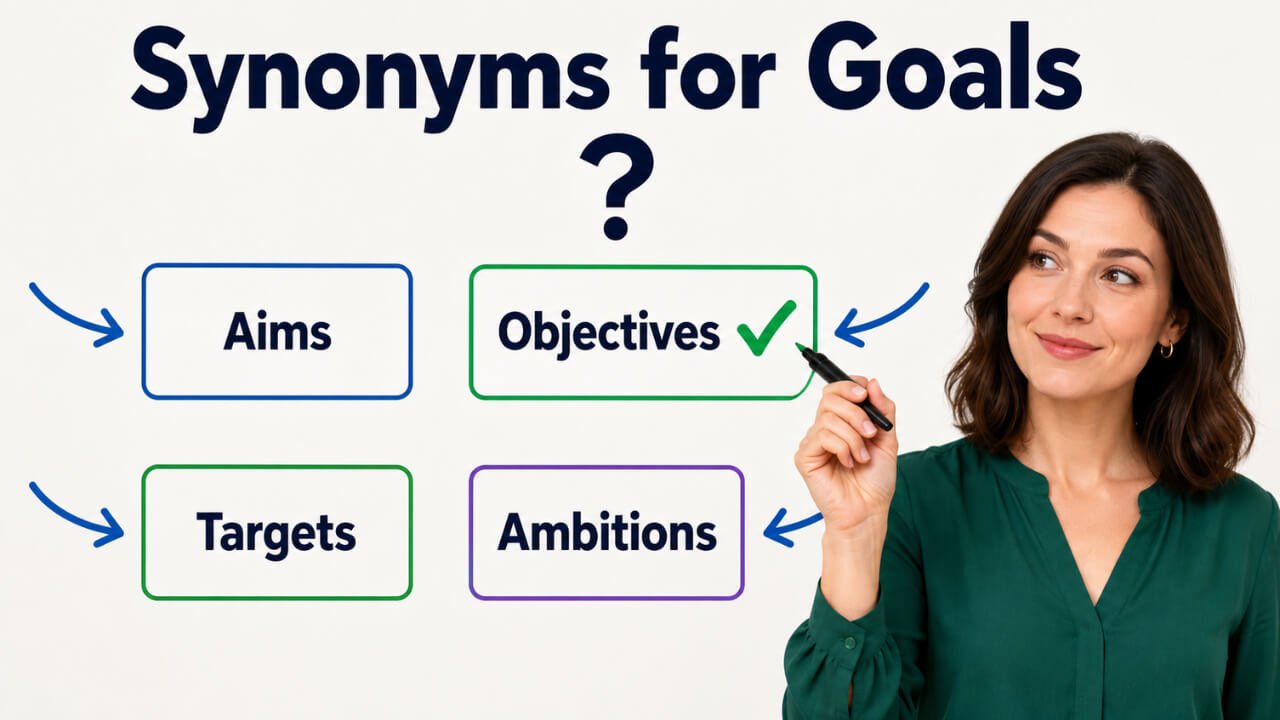
Quick Answer: Synonyms for goals include objectives, aims, targets, ambitions, aspirations, purposes, plans, intentions, milestones, and dreams. Use objectives in formal, academic, or business writing. Use aims when talking about general purposes. Use targets for measurable results. Use ambitions or aspirations for personal growth. Use milestones for important progress points. Use dreams in emotional or inspirational contexts.
Pronunciation and Word Details
Word: Goals
Pronunciation: /ɡoʊlz/
Part of Speech: Plural noun
Meaning: Goals are desired results, achievements, or aims that a person, group, or organization wants to reach.
US Pronunciation:
UK Pronunciation:
What Does “Goals” Mean?
Goals means the results, achievements, or purposes someone wants to reach. It is the plural form of goal, which is a noun. A goal can be personal, professional, academic, financial, creative, emotional, or physical.
In writing and speech, goals can refer to future plans, intended results, life ambitions, business objectives, learning targets, or performance outcomes. The word works well in both formal and casual sentences.
Example: Her goals include improving her writing, saving money, and learning a new skill.
Example: The team set clear goals for the next project.
Example: Students need realistic goals to stay focused.
Meaning, Tone, and Context of “Goals”
The word goals is neutral, clear, and widely used in everyday speech, education, business, sports, personal development, and planning. It is not too formal or too casual, which makes it suitable for many situations.
In academic writing, goals may refer to learning objectives or research aims. In business, it often means measurable objectives, targets, or outcomes. In personal growth, it can mean dreams, ambitions, aspirations, or plans. In sports, goals can also mean points scored, but this article focuses mainly on goals as aims or desired results.
The tone of goals depends on context. It can sound practical when used for planning, motivational when used for personal dreams, and formal when used in business or academic documents.
When and How to Use “Goals”
For Planning: Use goals when talking about what someone wants to achieve in the future.
Example: She wrote down her goals before starting the new year.
For Business: Use goals when describing company targets, team objectives, or expected results.
Example: The department created goals for sales, service, and customer satisfaction.
For Education: Use goals when talking about learning targets, study plans, or academic progress.
Example: His goals include improving grammar and reading faster.
For Personal Growth: Use goals when describing self improvement, habits, dreams, or life plans.
Example: One of her goals is to become more confident in public speaking.
For Measurable Results: Use goals when the achievement can be tracked or measured.
Example: The project goals include reducing costs and improving quality.
For Motivation: Use goals when inspiring someone to stay focused on an important result.
Example: Clear goals can help you stay motivated during difficult times.
Best Synonyms for Goals
Objectives: Specific results that someone wants to achieve.
Example: The course objectives were explained on the first day.
Aims: General purposes or intentions.
Example: Her main aims are to learn more and work with confidence.
Targets: Measurable goals that someone tries to reach.
Example: The team met its monthly targets ahead of schedule.
Ambitions: Strong desires to achieve something important.
Example: His ambitions include becoming a skilled writer.
Aspirations: Hopes or dreams for future success.
Example: Her aspirations inspired her to study harder.
Purposes: Reasons for doing something.
Example: The purposes of the program were clear and practical.
Plans: Intended actions for achieving something.
Example: Their plans include expanding the project next year.
Intentions: Things someone plans or means to do.
Example: His intentions were honest, but the plan needed more detail.
Milestones: Important steps or progress points toward a larger goal.
Example: Completing the first chapter was an important milestone.
Dreams: Deep wishes or hopes for the future.
Example: Her dreams encouraged her to keep working.
50 Synonyms for Goals with Short Meanings
- Objectives: Specific results someone wants to achieve.
- Aims: General purposes or intended results.
- Targets: Measurable points someone tries to reach.
- Ambitions: Strong desires for achievement or success.
- Aspirations: Hopes for future growth or success.
- Purposes: Reasons behind actions or plans.
- Plans: Intended steps for future action.
- Intentions: Things someone means or plans to do.
- Milestones: Important progress points toward success.
- Dreams: Deep hopes or wishes for the future.
- Desires: Strong wants or wishes.
- Hopes: Positive expectations for the future.
- Missions: Important tasks or purposes.
- Visions: Clear ideas of future success.
- Priorities: Important goals that need attention first.
- Outcomes: Final results of actions or efforts.
- Results: Effects or achievements produced by effort.
- Achievements: Successful results reached through work.
- Accomplishments: Completed achievements or successes.
- Intent: Purpose or aim behind an action.
- End goals: Final results someone wants to reach.
- End points: Final stages or desired results.
- Destinations: Final places, results, or aims.
- Benchmarks: Standards used to measure progress.
- Standards: Expected levels of quality or success.
- Goalscapes: Connected sets of goals and aims.
- Focus points: Main areas of attention or effort.
- Performance goals: Targets related to work or ability.
- Learning goals: Results someone wants to reach through study.
- Career goals: Professional achievements someone wants.
- Life goals: Important personal aims for life.
- Financial goals: Money related targets or plans.
- Fitness goals: Health or exercise targets.
- Growth goals: Aims focused on improvement.
- Project goals: Desired results of a project.
- Strategic goals: Long term planned objectives.
- Short term goals: Aims meant to be reached soon.
- Long term goals: Aims meant to be reached later.
- Action goals: Goals based on specific actions.
- Success markers: Signs that show progress or achievement.
- Desired results: Outcomes someone wants.
- Expected outcomes: Results that are planned or predicted.
- Final aims: Main results wanted at the end.
- Purpose statements: Clear expressions of intent.
- Development goals: Aims related to growth and improvement.
- Performance targets: Measurable achievement levels.
- Key results: Important results used to show success.
- Personal targets: Individual aims or desired achievements.
- Work goals: Professional tasks or achievements.
- Future plans: Intended actions or aims for later.
Read Also:
Synonyms for Conclusion

Synonyms for Goals by Context
When Goals Mean Objectives
Use these synonyms when goals means clear, planned results in work, study, business, or formal writing.
Objectives: Specific results that guide action.
Example: The project objectives were clear and measurable.
Aims: General results someone wants to achieve.
Example: The main aims of the lesson were simple.
Targets: Measurable results that can be tracked.
Example: The team reached its targets before the deadline.
Key Results: Important outcomes that show progress.
Example: The key results helped measure the success of the plan.
When Goals Mean Personal Dreams
Use these synonyms when goals means personal hopes, dreams, or future success.
Ambitions: Strong desires to achieve something important.
Example: Her ambitions pushed her to work harder.
Aspirations: Hopes for future growth or success.
Example: His aspirations included becoming a respected teacher.
Dreams: Emotional hopes for the future.
Example: She followed her dreams with patience and discipline.
Desires: Strong wishes or wants.
Example: His desires shaped his personal goals.
When Goals Mean Plans
Use these synonyms when goals means intended actions or future direction.
Plans: Intended steps or actions.
Example: Their plans included saving money and studying more.
Intentions: Things someone plans to do.
Example: Her intentions were clear from the beginning.
Future Plans: Actions someone wants to take later.
Example: His future plans include starting a small business.
Purpose Statements: Clear explanations of what someone wants to do.
Example: The purpose statements helped organize the project.
When Goals Mean Results
Use these synonyms when goals means final results, achievements, or outcomes.
Outcomes: Final effects of actions or decisions.
Example: The expected outcomes were listed in the report.
Results: What happens because of effort.
Example: The results showed steady improvement.
Achievements: Successful results gained through work.
Example: Her achievements reflected years of effort.
Accomplishments: Completed successes or finished achievements.
Example: The award recognized his accomplishments.
When Goals Mean Progress Points
Use these synonyms when goals means smaller steps toward a bigger achievement.
Milestones: Important progress points.
Example: Finishing the first draft was a major milestone.
Benchmarks: Standards used to measure progress.
Example: The benchmarks helped track student improvement.
Success Markers: Signs that show achievement.
Example: Better confidence was one of the success markers.
Focus Points: Main areas that need attention.
Example: Grammar and clarity were her focus points.
Another Word for Goals
Another word for goals is objectives when you mean clear results someone wants to achieve. However, the best replacement depends on context. Use targets for measurable results, aims for general purposes, ambitions for strong personal desires, and milestones for steps toward progress.
Original: The company set new goals for the year.
Better Option: The company set new objectives for the year.
Original: Her goals include becoming a better speaker.
Better Option: Her ambitions include becoming a better speaker.
Original: The class goals were explained clearly.
Better Option: The class aims were explained clearly.
Original: The team reached its goals last month.
Better Option: The team reached its targets last month.
When Not to Use “Goals”
Do not use goals when another word gives a more exact meaning. In formal business or academic writing, objectives may sound more precise. In measurable situations, targets is often stronger. In emotional or personal writing, dreams, ambitions, or aspirations may sound more natural.
Weak: The report goals were written at the end.
Better: The report objectives were written at the end.
Weak: The sales goals were 500 orders.
Better: The sales targets were 500 orders.
Weak: Her goals to help others came from childhood.
Better: Her aspirations to help others came from childhood.
Weak: The goals of the story were emotional.
Better: The themes of the story were emotional.
Weak: He had goals about the meeting schedule.
Better: He had plans for the meeting schedule.
Words Commonly Confused With Goals
Goals vs Objectives: Goals are broader desired results, while objectives are more specific and measurable steps. A goal may be long term, but an objective usually explains how success will be reached.
Goals vs Aims: Goals can be personal, professional, or measurable. Aims are often broader purposes or directions. Aims may sound slightly more general than goals.
Goals vs Targets: Goals can be broad or specific. Targets are usually measurable and often include numbers, deadlines, or performance levels.
Goals vs Dreams: Goals are usually planned and actionable. Dreams are hopes or wishes that may or may not have a clear plan.
Goals vs Ambitions: Goals are desired results. Ambitions are strong desires for success, status, progress, or achievement.
Goals vs Plans: Goals describe what someone wants to achieve. Plans describe the actions someone will take to reach those goals.
Goals vs Outcomes: Goals are desired results before action. Outcomes are the final results after action.
Which Synonym Should You Choose?
Choose objectives when writing formally about business, education, projects, or organized plans.
Choose aims when describing general purposes or broad intentions.
Choose targets when the result is measurable, such as money, scores, numbers, deadlines, or performance.
Choose ambitions when writing about strong personal desires or career success.
Choose aspirations when the tone is hopeful, personal, or inspirational.
Choose plans when focusing on actions instead of results.
Choose milestones when talking about important steps toward a bigger achievement.
Choose outcomes when describing final results after work, study, or action.
Choose dreams when the tone is emotional, personal, or motivational.
Choose priorities when some goals are more important than others.
Real Life Examples of “Goals” in Sentences
Original: Her goals for the year are clear.
Better Option: Her objectives for the year are clear.
Original: The team worked hard to reach its goals.
Better Option: The team worked hard to reach its targets.
Original: His goals include becoming a successful designer.
Better Option: His ambitions include becoming a successful designer.
Original: The school goals were shared with parents.
Better Option: The school aims were shared with parents.
Original: My goals include saving money and learning English.
Better Option: My plans include saving money and learning English.
Original: Their goals changed after the first meeting.
Better Option: Their priorities changed after the first meeting.
Original: The goals of the program were practical.
Better Option: The objectives of the program were practical.
Original: Her goals inspired her to keep trying.
Better Option: Her dreams inspired her to keep trying.
Original: The project goals were completed on time.
Better Option: The project milestones were completed on time.
Original: Our goals were finally reached after months of effort.
Better Option: Our desired results were finally reached after months of effort.
Synonym Groups and Usage Differences
Objective Group
Words in this group include objectives, aims, targets, key results, and strategic goals. Use them when writing about organized plans, business, education, reports, or projects.
Example: The project objectives helped the team stay focused.
Personal Growth Group
Words in this group include ambitions, aspirations, dreams, desires, and life goals. Use them when writing about personal development, motivation, and future success.
Example: Her aspirations encouraged her to study every day.
Planning Group
Words in this group include plans, intentions, future plans, missions, and purpose statements. Use them when focusing on direction, action, or intention.
Example: His plans showed that he was serious about improvement.
Result Group
Words in this group include outcomes, results, achievements, accomplishments, and desired results. Use them when describing what someone wants to produce or what has already been achieved.
Example: The expected outcomes were explained before the training began.
Progress Group
Words in this group include milestones, benchmarks, success markers, focus points, and development goals. Use them when tracking progress toward a larger goal.
Example: Each milestone made the larger goal feel easier to reach.
Antonyms of Goals
The opposite of goals depends on the meaning. If goals mean direction, the opposite may be aimlessness. If goals mean plans, the opposite may be randomness or lack of purpose. If goals mean desired results, the opposite may be obstacles or setbacks.
Aimlessness: Lack of direction or purpose.
Confusion: Unclear thinking or uncertain direction.
Randomness: Action without clear planning.
Disinterest: Lack of desire or concern.
Indifference: Lack of interest or motivation.
Uncertainty: Lack of clear direction or decision.
Lack of Purpose: Absence of a meaningful aim.
Setbacks: Problems that slow progress.
Obstacles: Difficulties that block success.
Failure: Not reaching the desired result.
Comparison Between Goals and Related Words
Goals vs Objectives
Goals are desired results that may be broad or long term. Objectives are usually more specific, practical, and measurable.
Example With Goals: Her goals include improving her communication skills.
Example With Objectives: Her objectives include speaking clearly in meetings and writing better reports.
Goals vs Aims
Goals often suggest achievement or results. Aims suggest purpose, direction, or intention.
Example With Goals: The goals of the project were reached on time.
Example With Aims: The aims of the project were explained in the introduction.
Goals vs Targets
Goals can be general or specific. Targets are usually measurable and often linked to numbers, deadlines, or performance.
Example With Goals: The team set goals for better customer service.
Example With Targets: The team set targets for response time and customer ratings.
Goals vs Dreams
Goals usually involve planning and action. Dreams are hopes or wishes, often emotional or inspirational.
Example With Goals: Her goals include finishing her degree.
Example With Dreams: Her dreams include building a better future for her family.
Goals vs Ambitions
Goals are the results someone wants. Ambitions are strong desires to succeed, grow, or achieve something important.
Example With Goals: His goals are practical and realistic.
Example With Ambitions: His ambitions pushed him to work harder than before.
Goals vs Outcomes
Goals are planned before action. Outcomes are the final results after action.
Example With Goals: The goals were listed before the project started.
Example With Outcomes: The outcomes were reviewed after the project ended.
Common Phrases and Expressions With Goals
Set Goals: To choose results you want to achieve.
Reach Goals: To successfully achieve desired results.
Achieve Goals: To complete or accomplish aims.
Long Term Goals: Goals planned for the distant future.
Short Term Goals: Goals planned for the near future.
Personal Goals: Goals related to individual life or growth.
Career Goals: Goals related to professional success.
Learning Goals: Goals related to study or skill development.
Financial Goals: Goals related to money, saving, or income.
Clear Goals: Goals that are easy to understand and follow.
Common Mistakes to Avoid
One common mistake is using goals when objectives would be more precise. In formal writing, objectives often sounds clearer because it suggests specific, measurable results.
Weak: The goals of the research were listed in detail.
Better: The objectives of the research were listed in detail.
Another mistake is using goals for exact numbers when targets fits better.
Weak: Our goal is 10,000 visitors this month.
Better: Our target is 10,000 visitors this month.
A third mistake is confusing goals with plans. A goal is what you want to achieve. A plan is how you will achieve it.
Weak: My goal is to study two hours every day.
Better: My plan is to study two hours every day.
Writers also repeat goals too often. Use objectives, aims, targets, ambitions, or milestones when the meaning fits.
Weak: My goals are clear, and these goals help me reach my goals.
Better: My objectives are clear, and these milestones help me reach my long term aims.
Another mistake is choosing a synonym with the wrong tone. Dreams sounds emotional. Targets sounds measurable. Objectives sounds formal. Choose the word that matches the situation.
Weak: The business dreams were reviewed by the manager.
Better: The business objectives were reviewed by the manager.
Conclusion
Learning synonyms for goals helps you write with more accuracy, variety, and purpose. Use objectives for formal plans, aims for general purposes, targets for measurable results, ambitions for strong personal desires, and aspirations for hopeful future success. Use milestones when describing progress and outcomes when discussing final results. The best synonym depends on whether you mean planning, achievement, motivation, measurement, or personal growth.
FAQs About Synonyms for Goals
What is the best synonym for goals?
The best synonym for goals is objectives in formal writing. In casual speech, aims, plans, or targets may sound more natural depending on the sentence.
What is another word for goals in business?
Another word for goals in business is objectives or targets. Use objectives for planned results and targets for measurable numbers or performance levels.
What is another word for personal goals?
Another word for personal goals is ambitions, aspirations, dreams, or life goals. These words work well when talking about growth, success, and future plans.
Are goals and objectives the same?
Goals and objectives are similar, but not exactly the same. Goals are often broader, while objectives are more specific, practical, and measurable.
What is a formal synonym for goals?
Formal synonyms for goals include objectives, aims, targets, desired outcomes, strategic goals, and key results. These are useful in reports, essays, and business writing.
What is a simple synonym for goals?
A simple synonym for goals is aims. Other easy alternatives include plans, targets, and dreams, depending on the meaning.
Can I use targets instead of goals?
You can use targets instead of goals when the result is measurable. For example, use targets for sales numbers, deadlines, scores, or performance levels.
