
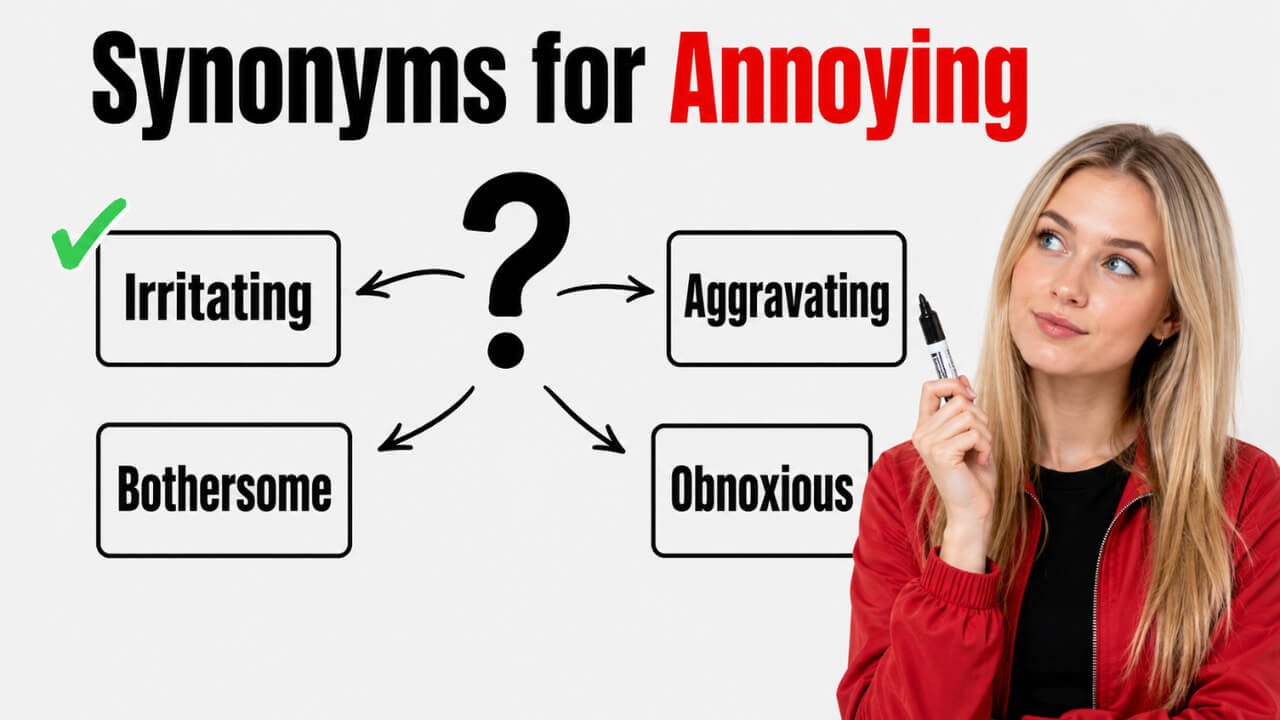
Quick Answer: Synonyms for annoying include irritating, bothersome, vexing, aggravating, exasperating, frustrating, tiresome, irksome, pesky, and grating. Use irritating for general discomfort, bothersome for mild problems, frustrating when something blocks progress, exasperating for stronger irritation, pesky for small repeated annoyances, and grating for sounds, habits, or behavior that feels unpleasant over time.
Pronunciation and Word Details
Word: Annoying.
Pronunciation: /əˈnɔɪɪŋ/.
Part of Speech: Adjective.
Meaning: Annoying means causing slight anger, irritation, discomfort, or repeated frustration.
US Pronunciation:
UK Pronunciation:
What Does “Annoying” Mean?
Annoying means causing irritation, discomfort, impatience, or mild anger. It is an adjective used to describe a person, sound, habit, action, problem, situation, or repeated behavior that bothers someone.
The word can describe something small, such as an annoying noise, or something more serious, such as an annoying delay that affects your work. In sentences, annoying usually appears before a noun or after linking verbs such as is, was, seems, feels, and becomes.
Meaning, Tone, and Context of “Annoying”
Annoying is a common and neutral word. It works in casual speech, everyday writing, emails, stories, reviews, and simple explanations. It is not very formal, but it is also not rude by itself. The tone depends on what it describes.
In professional writing, stronger or more precise synonyms may be better. For example, use disruptive for behavior that interrupts work, frustrating for blocked progress, inconvenient for practical trouble, and objectionable for something unacceptable. In casual speech, words like pesky, irritating, and bothersome sound natural.
When and How to Use “Annoying”
For Mild Irritation: Use annoying when something bothers you but is not extremely serious.
Example: The slow internet connection was annoying during the meeting.
For Repeated Problems: Use annoying when a problem happens again and again.
Example: It is annoying when the same error appears every time I open the file.
For Behavior: Use annoying to describe habits, actions, or attitudes that bother others.
Example: His habit of interrupting people is annoying.
For Sounds: Use annoying when a sound is unpleasant or hard to ignore.
Example: The buzzing sound from the light was annoying.
For Delays: Use annoying when something wastes time or creates inconvenience.
Example: The long delay at the station was annoying for everyone.
For Casual Complaints: Use annoying in everyday conversation when you want to express irritation simply.
Example: It is annoying when my phone battery dies so quickly.
Best Synonyms for Annoying
Irritating: Causing mild anger or discomfort.
Example: The constant noise outside was irritating.
Bothersome: Causing trouble, worry, or slight discomfort.
Example: The extra paperwork became bothersome after a while.
Vexing: Difficult, troubling, or irritating in a puzzling way.
Example: The missing information created a vexing problem.
Aggravating: Making a situation feel more irritating or difficult.
Example: The repeated delays were aggravating for the whole team.
Exasperating: Extremely irritating because it tests patience.
Example: Her refusal to listen was exasperating.
Frustrating: Annoying because something blocks progress or success.
Example: The unclear instructions were frustrating.
Tiresome: Annoying because something feels dull, repeated, or exhausting.
Example: The same complaint became tiresome.
Irksome: Annoying in a small but persistent way.
Example: Filling out the same form twice was irksome.
Pesky: Annoying in a small, repeated, or playful way.
Example: The pesky fly kept landing on the table.
Grating: Annoying because it feels harsh, unpleasant, or hard to tolerate.
Example: His loud chewing was grating.
50 Synonyms for Annoying with Short Meanings
- Irritating: Causing discomfort or mild anger.
- Bothersome: Causing trouble or slight annoyance.
- Vexing: Annoying, confusing, or difficult to deal with.
- Aggravating: Making irritation or difficulty worse.
- Exasperating: Very annoying because it tests patience.
- Frustrating: Annoying because progress is blocked.
- Tiresome: Annoying because it feels repeated or dull.
- Wearisome: Annoying because it causes tiredness or boredom.
- Tedious: Annoying because it is long, dull, or repetitive.
- Irksome: Slightly annoying in a persistent way.
- Nettlesome: Annoying because it repeatedly irritates.
- Pesky: Annoying in a small or repeated way.
- Grating: Harsh or unpleasant in a way that irritates.
- Maddening: Extremely annoying or frustrating.
- Infuriating: Causing strong anger or irritation.
- Trying: Difficult to tolerate and patience testing.
- Troublesome: Causing problems, difficulty, or annoyance.
- Inconvenient: Causing practical trouble or difficulty.
- Disruptive: Interrupting order, focus, or progress.
- Distracting: Pulling attention away in an annoying way.
- Intrusive: Annoying because it enters where it is not wanted.
- Unwelcome: Not wanted and therefore unpleasant.
- Unpleasant: Not enjoyable, comfortable, or agreeable.
- Disagreeable: Unpleasant or difficult to accept.
- Objectionable: Annoying or unacceptable enough to criticize.
- Provoking: Causing anger, irritation, or reaction.
- Galling: Deeply irritating or humiliating.
- Rankling: Continuing to irritate or bother the mind.
- Vexatious: Annoying, troublesome, or difficult in a formal sense.
- Niggling: Small but persistent and annoying.
- Pestering: Annoying through repeated requests or actions.
- Nagging: Repeatedly annoying through reminders or complaints.
- Harassing: Persistently bothering or troubling someone.
- Demanding: Requiring too much effort, attention, or patience.
- Burdensome: Annoying because it feels heavy or difficult to manage.
- Difficult: Hard to deal with and sometimes annoying.
- Problematic: Causing problems or complications.
- Disturbing: Interrupting peace, comfort, or focus.
- Noisy: Annoying because it makes too much sound.
- Loud: Annoying because the sound is too strong.
- Repetitive: Annoying because it happens too often.
- Monotonous: Annoying because it lacks variety.
- Obnoxious: Very unpleasant, rude, or annoying.
- Insufferable: Too annoying or unpleasant to tolerate.
- Intolerable: So annoying or unpleasant that it cannot be accepted.
- Abrasive: Annoying because it feels harsh or rude.
- Overbearing: Annoying because it is controlling or too forceful.
- Pushy: Annoying because it is too aggressive or insistent.
- Whiny: Annoying because it complains in a weak or repeated way.
- Fussy: Annoying because it is too particular, difficult, or hard to please.
Read Also:
Synonyms for Technology
Synonyms for Annoying by Context
When Annoying Means Irritating
Use these words when something causes discomfort, impatience, or mild anger.
Irritating: The constant tapping sound was irritating.
Bothersome: The small error became bothersome during editing.
Irksome: It was irksome to repeat the same task.
Nettlesome: The nettlesome issue returned after every update.
Grating: Her sharp tone became grating after a few minutes.
When Annoying Means Frustrating
Use these words when something blocks progress, wastes time, or makes a task harder.
Frustrating: The confusing instructions were frustrating.
Aggravating: The slow response was aggravating.
Exasperating: The repeated mistakes were exasperating.
Trying: The long process was trying for everyone.
Maddening: The missing file was maddening.
When Annoying Means Repetitive or Dull
Use these words when something becomes annoying because it happens too often or lasts too long.
Tiresome: The repeated excuse became tiresome.
Wearisome: The long speech was wearisome.
Tedious: The tedious form took an hour to complete.
Repetitive: The repetitive music became hard to enjoy.
Monotonous: The monotonous voice made the lesson feel longer.
When Annoying Means Disruptive
Use these words when something interrupts peace, attention, order, or work.
Disruptive: The loud conversation was disruptive.
Distracting: The flashing light was distracting.
Intrusive: The constant notifications felt intrusive.
Disturbing: The noise was disturbing during study time.
Noisy: The noisy hallway made it hard to focus.
When Annoying Means Rude or Hard to Tolerate
Use these words when a person, habit, or behavior feels unpleasant, harsh, or unacceptable.
Obnoxious: His obnoxious comments annoyed everyone.
Insufferable: Her constant bragging became insufferable.
Abrasive: His abrasive tone made the discussion uncomfortable.
Overbearing: The overbearing manager made simple tasks stressful.
Pushy: The pushy salesperson would not stop talking.
Another Word for Annoying
Another word for annoying is irritating. It is the best general replacement because it works for sounds, habits, people, problems, delays, and repeated actions. However, the best alternative depends on context. Use frustrating for blocked progress, disruptive for interruptions, pesky for small problems, and obnoxious for rude behavior.
Original: The buzzing noise was annoying.
Better Option: The buzzing noise was irritating.
Original: The delay was annoying.
Better Option: The delay was frustrating.
Original: The pop ups were annoying.
Better Option: The pop ups were intrusive.
Original: His rude jokes were annoying.
Better Option: His rude jokes were obnoxious.
When Not to Use “Annoying”
Do not use annoying when you need a stronger, softer, or more precise word. Annoying is clear, but it can sound too general if the real meaning is rude, disruptive, inconvenient, repetitive, or emotionally upsetting.
Weak: The broken system is annoying.
Better: The broken system is frustrating.
Weak: His behavior was annoying in the meeting.
Better: His behavior was disruptive in the meeting.
Weak: The extra form was annoying.
Better: The extra form was inconvenient.
Weak: The song became annoying after an hour.
Better: The song became repetitive after an hour.
Weak: Her comments were annoying.
Better: Her comments were abrasive.
Avoid using annoying too often in one paragraph. Repetition makes the writing feel flat. Replace it with specific synonyms that match the cause of irritation.
Words Commonly Confused With Annoying
Annoying vs Irritating: Annoying is general and common. Irritating is slightly more specific and focuses on discomfort or mild anger.
Annoying vs Frustrating: Annoying means something bothers you. Frustrating means something blocks your progress or prevents success.
Annoying vs Aggravating: Annoying can be mild. Aggravating feels stronger and suggests that a problem is getting worse.
Annoying vs Exasperating: Annoying can describe small irritation. Exasperating means extremely annoying because it tests your patience.
Annoying vs Obnoxious: Annoying can describe sounds, delays, or small problems. Obnoxious usually describes rude, unpleasant, or offensive behavior.
Annoying vs Disruptive: Annoying means bothersome. Disruptive means interrupting order, focus, peace, or progress.
Annoying vs Inconvenient: Annoying describes irritation. Inconvenient describes practical difficulty or trouble.
Which Synonym Should You Choose?
Choose irritating when something causes mild anger, discomfort, or impatience.
Choose bothersome when the problem is mild but still unpleasant.
Choose frustrating when something blocks progress, wastes effort, or prevents success.
Choose aggravating when the situation becomes more annoying over time.
Choose exasperating when someone or something strongly tests your patience.
Choose pesky when the annoyance is small, repeated, and not very serious.
Choose grating for sounds, habits, voices, or behavior that becomes unpleasant.
Choose disruptive in formal or professional writing when something interrupts work, order, or focus.
Choose inconvenient when the issue creates practical trouble.
Choose obnoxious when describing rude, unpleasant, or hard to tolerate behavior.
Real Life Examples of “Annoying” in Sentences
Original: The loud music was annoying.
Better Option: The loud music was irritating.
Original: Waiting for the page to load was annoying.
Better Option: Waiting for the page to load was frustrating.
Original: The repeated reminders were annoying.
Better Option: The repeated reminders were bothersome.
Original: His jokes became annoying.
Better Option: His jokes became obnoxious.
Original: The small errors were annoying.
Better Option: The small errors were irksome.
Original: The alarm sound was annoying.
Better Option: The alarm sound was grating.
Original: The long form was annoying.
Better Option: The long form was tedious.
Original: Her constant complaints were annoying.
Better Option: Her constant complaints were tiresome.
Original: The meeting interruptions were annoying.
Better Option: The meeting interruptions were disruptive.
Original: The extra steps were annoying.
Better Option: The extra steps were inconvenient.
Synonym Groups and Usage Differences
Mild Irritation Group
This group includes irritating, bothersome, irksome, pesky, and niggling. Use these words for small problems, light complaints, and everyday discomfort.
Example: The small delay was bothersome but not serious.
Strong Frustration Group
This group includes aggravating, exasperating, maddening, infuriating, and trying. Use these words when annoyance becomes intense or hard to tolerate.
Example: The repeated technical errors were exasperating.
Repetition Group
This group includes tiresome, wearisome, tedious, repetitive, and monotonous. Use these words when something is annoying because it keeps happening or feels dull.
Example: The repetitive instructions became tiresome.
Disruption Group
This group includes disruptive, distracting, intrusive, disturbing, and noisy. Use these words when something interrupts focus, peace, or normal activity.
Example: The noisy hallway was distracting during the exam.
Behavior Group
This group includes obnoxious, abrasive, overbearing, pushy, whiny, and fussy. Use these words when describing people, habits, attitudes, or social behavior.
Example: His pushy attitude made the conversation uncomfortable.
Antonyms of Annoying
Pleasant: Enjoyable and not irritating.
Enjoyable: Giving pleasure or satisfaction.
Comforting: Making someone feel calm or supported.
Soothing: Calming and gentle.
Relaxing: Helping someone feel calm and free from stress.
Helpful: Useful instead of troublesome.
Convenient: Easy to use or suitable for the situation.
Agreeable: Pleasant, acceptable, or easy to like.
Delightful: Very pleasing or enjoyable.
Tolerable: Acceptable enough to handle without strong irritation.
Comparison: Annoying vs Related Words
Annoying vs Irritating
Annoying is a broad word for anything that bothers you. Irritating focuses more directly on discomfort or mild anger.
Example With Annoying: The repeated noise was annoying.
Example With Irritating: The repeated noise was irritating.
Annoying vs Frustrating
Annoying means bothersome. Frustrating means annoying because something stops progress or success.
Example With Annoying: The login issue was annoying.
Example With Frustrating: The login issue was frustrating because I could not finish my work.
Annoying vs Aggravating
Annoying can be mild or general. Aggravating suggests stronger irritation or a situation that becomes worse.
Example With Annoying: The delay was annoying.
Example With Aggravating: The repeated delay was aggravating.
Annoying vs Exasperating
Annoying can describe small irritation. Exasperating describes something that seriously tests patience.
Example With Annoying: His excuses were annoying.
Example With Exasperating: His constant excuses were exasperating.
Annoying vs Obnoxious
Annoying can describe many things. Obnoxious usually describes rude, offensive, or very unpleasant behavior.
Example With Annoying: His loud voice was annoying.
Example With Obnoxious: His rude comments were obnoxious.
Annoying vs Inconvenient
Annoying focuses on irritation. Inconvenient focuses on difficulty, trouble, or poor timing.
Example With Annoying: The extra step was annoying.
Example With Inconvenient: The extra step was inconvenient during a busy day.
Common Phrases and Expressions With Annoying
Annoying Habit: A repeated behavior that irritates others.
Annoying Sound: A noise that is unpleasant or hard to ignore.
Annoying Problem: A small or repeated issue that causes frustration.
Annoying Person: Someone whose behavior bothers others.
Annoying Delay: A wait that causes irritation or inconvenience.
Annoying Question: A question that feels repeated, unnecessary, or bothersome.
Annoying Mistake: An error that creates extra work or frustration.
Annoying Situation: A circumstance that causes discomfort or impatience.
Annoying Behavior: Actions that irritate or disturb others.
Annoying Interruption: A break in focus that feels unwanted.
Common Mistakes to Avoid
A common mistake is using annoying for every negative feeling. If something blocks progress, frustrating is often better. If something interrupts work, disruptive is more precise. If something is rude, obnoxious may be stronger and clearer.
Another mistake is using annoying in formal writing when a more professional word fits better. In reports or workplace writing, use words like inconvenient, disruptive, problematic, or objectionable.
Avoid repeating annoying too much. Instead of saying an annoying sound, annoying delay, and annoying problem, use irritating sound, frustrating delay, and bothersome problem. Also avoid choosing overly strong words like infuriating or intolerable for small issues unless the tone truly needs that force.
Conclusion
Synonyms for annoying help you describe irritation with better accuracy and tone. Use irritating for general discomfort, bothersome for mild trouble, frustrating for blocked progress, exasperating for stronger impatience, pesky for small repeated problems, and obnoxious for rude behavior. For formal writing, disruptive, inconvenient, problematic, and objectionable can sound more professional. The best synonym depends on whether the annoyance comes from a person, sound, delay, habit, task, or situation.
FAQs About Synonyms for Annoying
What is the best synonym for annoying?
The best synonym for annoying is irritating because it works in many everyday situations. It can describe sounds, habits, people, problems, and delays.
What is a more formal word for annoying?
A more formal word for annoying is disruptive, inconvenient, problematic, or objectionable, depending on the meaning.
What is a stronger word than annoying?
Stronger words than annoying include exasperating, maddening, infuriating, insufferable, and intolerable.
What is a softer word for annoying?
A softer word for annoying is bothersome, pesky, irksome, or niggling. These words suggest mild irritation.
Is irritating the same as annoying?
Yes, irritating and annoying are very similar. Irritating focuses more on discomfort or mild anger, while annoying is broader and more common.
What is another word for an annoying person?
Another word for an annoying person can be bothersome, obnoxious, pushy, overbearing, whiny, or fussy, depending on the behavior.
What is the opposite of annoying?
The opposite of annoying can be pleasant, soothing, comforting, helpful, convenient, or enjoyable, depending on the context
