
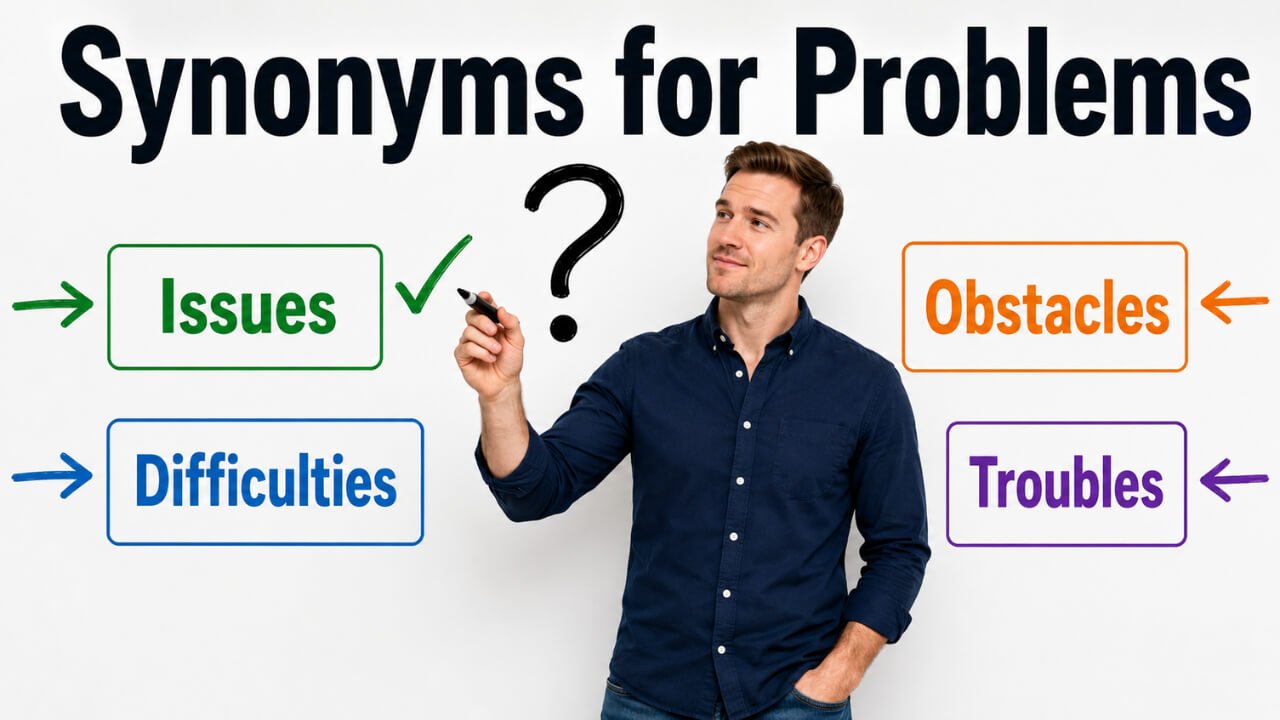
Quick Answer: The best synonyms for problems are issues, challenges, difficulties, troubles, complications, obstacles, setbacks, concerns, dilemmas, and predicaments. Use issues for general situations, challenges for difficulties that can be overcome, concerns for worries or risks, obstacles for things that block progress, and complications when a situation becomes harder than expected.
Pronunciation and Word Details
Word: Problems
Pronunciation: /ˈprɑːbləmz/
Part of Speech: Plural noun
Meaning: Difficult situations, questions, or matters that need attention, action, or a solution.
US Pronunciation:
UK Pronunciation:
What Does “Problems” Mean?
Direct Answer: Problems are difficult matters, situations, questions, or conditions that need to be solved, managed, or understood.
Problems is the plural form of problem. It is commonly used as a noun in everyday speech, academic writing, business communication, technical discussion, and personal conversation. A problem can be a small issue, a serious difficulty, a confusing question, a mistake, a barrier, or a situation that causes stress.
Example: We need to solve these problems before the project can continue.
The word can describe practical matters, emotional struggles, technical errors, social conflicts, health concerns, logical questions, or anything that requires a solution.
Meaning, Tone, and Context of “Problems”
Tone: Problems is a neutral and common word. It is not too formal or too casual, so it fits many situations.
Context: The word is used in school, work, daily life, business, relationships, technology, health, planning, and decision making.
Formality: Problems works in both formal and casual writing. In professional writing, words like issues, challenges, concerns, complications, or obstacles may sound more specific.
Emotional Strength: Problems can sound serious when used with words like major, serious, ongoing, urgent, or unresolved.
Common Use: People use problems when something is wrong, difficult, unclear, delayed, broken, risky, or in need of a solution.
When and How to Use “Problems”
For General Difficulty: Use problems when talking about difficulties that need attention.
Example: The team is dealing with several problems this week.
For Work or Business: Use problems to describe matters that slow progress or create risk.
Example: Budget problems delayed the launch.
For Personal Life: Use problems when speaking about stress, conflict, or hard situations.
Example: She is facing family problems.
For Technical Errors: Use problems when something is not working correctly.
Example: The software has performance problems.
For Questions or Exercises: Use problems when referring to tasks that must be solved.
Example: The students solved ten math problems.
For Health or Safety: Use problems when describing conditions that affect well being.
Example: Poor sleep can cause health problems.
For Planning: Use problems when a plan has weaknesses or risks.
Example: The proposal still has a few practical problems.
Best Synonyms for Problems
Issues: General matters, difficulties, or concerns that need attention.
Example: We discussed the main issues during the meeting.
Challenges: Difficult tasks or situations that can be faced or overcome.
Example: The company handled its financial challenges well.
Difficulties: Hard situations that make progress less easy.
Example: They experienced difficulties during the move.
Troubles: Problems that cause stress, worry, or inconvenience.
Example: Car troubles made him late for work.
Complications: Extra problems that make a situation harder.
Example: The new rule created unexpected complications.
Obstacles: Barriers that block progress or success.
Example: Lack of funding became a major obstacle.
Setbacks: Problems that delay progress after some success.
Example: The injury was a serious setback for the athlete.
Concerns: Problems that cause worry or need careful attention.
Example: Safety concerns must be addressed first.
Dilemmas: Difficult situations where choosing the right action is hard.
Example: The manager faced several ethical dilemmas.
Predicaments: Difficult or awkward situations that are hard to escape.
Example: They found themselves in a financial predicament.
50 Synonyms for Problems with Short Meanings
- Issues: General matters that need attention.
- Challenges: Difficult situations that require effort.
- Difficulties: Hard conditions or tasks.
- Troubles: Problems that cause stress or inconvenience.
- Complications: Extra difficulties that make things harder.
- Obstacles: Barriers that stop or slow progress.
- Setbacks: Events that delay success or progress.
- Concerns: Matters that cause worry.
- Dilemmas: Situations involving hard choices.
- Predicaments: Difficult or awkward situations.
- Hardships: Serious difficulties in life or work.
- Barriers: Things that prevent movement or success.
- Snags: Small unexpected problems.
- Glitches: Minor technical problems or errors.
- Hitches: Small delays or difficulties.
- Flaws: Weaknesses or imperfections.
- Defects: Faults in something made or designed.
- Faults: Mistakes, weaknesses, or causes of failure.
- Errors: Mistakes in action, judgment, or information.
- Bugs: Problems in software or technical systems.
- Disputes: Arguments or disagreements.
- Conflicts: Serious disagreements or clashes.
- Crises: Very serious or urgent problems.
- Emergencies: Problems needing immediate action.
- Burdens: Heavy responsibilities or worries.
- Worries: Thoughts about possible problems.
- Questions: Matters needing answers or solutions.
- Matters: Situations or topics needing attention.
- Puzzles: Problems that are confusing or hard to solve.
- Mysteries: Problems with unknown causes or answers.
- Riddles: Difficult questions or confusing problems.
- Quandaries: States of doubt about what to do.
- Uncertainties: Situations without clear answers.
- Risks: Possible problems or dangers.
- Threats: Things that may cause harm.
- Hazards: Sources of danger or trouble.
- Weaknesses: Areas that create problems or failure.
- Shortcomings: Faults or limits in quality.
- Limitations: Restrictions that cause difficulty.
- Constraints: Limits that reduce choices or action.
- Bottlenecks: Points that slow progress.
- Impediments: Things that hinder movement or success.
- Roadblocks: Serious barriers to progress.
- Adversities: Difficult or unfortunate conditions.
- Misfortunes: Unlucky events or troubles.
- Plights: Serious or difficult situations.
- Objections: Problems raised against an idea.
- Complaints: Problems reported by people.
- Ailments: Health problems or illnesses.
- Malfunctions: Failures in machines or systems.
Read Also:
Synonyms for Innovative
Synonyms for Problems by Context
When Problems Means General Issues
Useful Synonyms: Issues, matters, concerns, questions, topics.
Example: The report explains the main issues affecting the plan.
Use: These words work best when the problem is broad, general, or not extremely serious.
When Problems Means Difficulties
Useful Synonyms: Difficulties, challenges, troubles, hardships, adversities.
Example: They overcame many challenges before reaching their goal.
Use: These words are useful for life, work, study, and growth situations.
When Problems Means Barriers
Useful Synonyms: Obstacles, barriers, impediments, roadblocks, constraints.
Example: Poor communication became a major obstacle.
Use: These synonyms fit when something blocks progress, action, or success.
When Problems Means Mistakes or Faults
Useful Synonyms: Errors, flaws, defects, faults, bugs, malfunctions.
Example: The system showed several errors after the update.
Use: These words are useful in technical, product, design, and quality contexts.
When Problems Means Worries
Useful Synonyms: Concerns, worries, risks, threats, hazards.
Example: The manager raised concerns about safety.
Use: These options work when the problem may cause harm, fear, or future trouble.
When Problems Means Confusing Questions
Useful Synonyms: Puzzles, riddles, mysteries, quandaries, uncertainties.
Example: The missing data created a mystery for the researchers.
Use: These words fit when the issue needs thought, analysis, or investigation.
Another Word for Problems
Direct Answer: The best single replacement for problems is usually issues, because it is natural, clear, and useful in many formal and casual contexts.
The best alternative depends on meaning. Use challenges when the situation can be overcome, concerns when the matter causes worry, obstacles when something blocks progress, and complications when a situation becomes harder.
Original: We need to discuss the problems in the plan.
Better Option: We need to discuss the issues in the plan.
Original: She faced many problems while starting her business.
Better Option: She faced many challenges while starting her business.
Original: Safety problems were reported yesterday.
Better Option: Safety concerns were reported yesterday.
Original: Budget problems slowed the project.
Better Option: Budget constraints slowed the project.
When Not to Use “Problems”
Do not use problems when a more specific word would be clearer. The word can sound vague if readers need to know whether you mean errors, risks, concerns, delays, conflicts, or barriers.
Weak: The product has problems.
Better: The product has several defects.
Weak: We had problems with the schedule.
Better: We had delays in the schedule.
Weak: There are problems in the report.
Better: There are factual errors in the report.
Weak: The company has money problems.
Better: The company has financial difficulties.
Weak: The team has problems with communication.
Better: The team has communication issues.
Words Commonly Confused With Problems
Problems vs Issues: Problems often suggests something difficult or negative, while issues can sound more neutral and professional.
Problems vs Challenges: Problems can sound negative, while challenges can sound more positive and growth focused.
Problems vs Difficulties: Difficulties describes hard conditions, while problems may refer to anything that needs solving.
Problems vs Concerns: Concerns are problems that cause worry or need attention before they become worse.
Problems vs Obstacles: Obstacles are things that block progress, while problems can include errors, worries, conflicts, or questions.
Problems vs Complications: Complications are added difficulties that make an existing situation harder.
Problems vs Errors: Errors are mistakes, while problems may include mistakes, barriers, risks, or conflicts.
Which Synonym Should You Choose?
Choose issues when you need a general and professional word for problems.
Choose challenges when the situation is difficult but can be overcome with effort.
Choose difficulties when describing hard conditions, struggles, or practical trouble.
Choose concerns when writing about worry, safety, risk, or possible harm.
Choose obstacles when something blocks progress or success.
Choose complications when something adds extra difficulty to an existing situation.
Choose errors when the problem is a mistake in data, writing, judgment, or action.
Choose defects when the problem is in a product, design, or manufactured item.
Choose conflicts when the problem involves disagreement between people or groups.
Choose crises when the problem is urgent, serious, and needs immediate action.
Real Life Examples of “Problems” in Sentences
Original: The team solved the problems quickly.
Better Option: The team resolved the issues quickly.
Original: She had problems understanding the instructions.
Better Option: She had difficulties understanding the instructions.
Original: The business faced many problems in its first year.
Better Option: The business faced many challenges in its first year.
Original: We noticed problems in the design.
Better Option: We noticed flaws in the design.
Original: The machine has problems again.
Better Option: The machine has malfunctions again.
Original: Money problems affected the family.
Better Option: Financial hardships affected the family.
Original: The new policy created problems for workers.
Better Option: The new policy created complications for workers.
Original: Traffic problems delayed the delivery.
Better Option: Traffic delays affected the delivery.
Original: Health problems kept him at home.
Better Option: Health ailments kept him at home.
Original: There are problems between the two departments.
Better Option: There are conflicts between the two departments.
Synonym Groups and Usage Differences
General Issue Group
Use: Issues, matters, and concerns are best when the situation is broad or needs discussion.
Example: The committee reviewed the main issues.
Difficulty Group
Use: Challenges, difficulties, hardships, and troubles describe hard experiences or tasks.
Example: Students often face challenges during exams.
Barrier Group
Use: Obstacles, barriers, constraints, and roadblocks describe things that stop progress.
Example: Limited funding became a roadblock.
Error Group
Use: Errors, defects, faults, bugs, and malfunctions describe mistakes or failures.
Example: The update fixed several bugs.
Worry Group
Use: Concerns, worries, risks, hazards, and threats describe possible danger or fear.
Example: The report highlighted safety risks.
Conflict Group
Use: Disputes and conflicts describe problems between people, groups, or ideas.
Example: The contract caused a dispute between the partners.
Antonyms of Problems
Solutions: Answers or actions that fix problems.
Answers: Information that resolves questions or confusion.
Benefits: Positive results instead of difficulties.
Advantages: Helpful conditions that support success.
Improvements: Changes that make a situation better.
Strengths: Positive qualities instead of weaknesses.
Successes: Good results instead of setbacks.
Resolutions: Settled or solved matters.
Opportunities: Useful chances instead of difficulties.
Ease: A state with little difficulty or trouble.
Certainties: Clear facts or conditions without doubt.
Comparison: Problems vs Related Words
Problems vs Issues
Difference: Problems sounds more directly negative, while issues can sound more neutral and professional.
Example With Problems: We must fix these problems before launch.
Example With Issues: We must address these issues before launch.
Problems vs Challenges
Difference: Problems focuses on difficulty, while challenges can suggest growth, effort, and possible success.
Example With Problems: The startup had many problems.
Example With Challenges: The startup faced many challenges.
Problems vs Concerns
Difference: Problems may already exist, while concerns may refer to worries about what could happen.
Example With Problems: The building has structural problems.
Example With Concerns: The engineer raised structural concerns.
Problems vs Complications
Difference: Problems can be general, while complications are extra difficulties that make something more complex.
Example With Problems: The plan has problems.
Example With Complications: The plan has legal complications.
Problems vs Obstacles
Difference: Problems can include many types of difficulty, while obstacles are specific barriers to progress.
Example With Problems: The team had several problems.
Example With Obstacles: The team faced several obstacles.
Problems vs Errors
Difference: Problems can be broad, while errors are specific mistakes.
Example With Problems: The file has problems.
Example With Errors: The file has formatting errors.
Common Phrases and Expressions With Problems
Solve Problems: Find answers or fixes.
Fix Problems: Correct something that is wrong.
Address Problems: Deal with problems carefully.
Cause Problems: Create difficulty or trouble.
Serious Problems: Difficulties that need urgent attention.
Health Problems: Medical or physical difficulties.
Financial Problems: Money related difficulties.
Technical Problems: Difficulties with machines, systems, or software.
Common Problems: Issues that happen often.
Ongoing Problems: Difficulties that continue over time.
Common Mistakes to Avoid
Using Problems Too Often: Repeating problems many times can make writing sound plain. Use issues, challenges, concerns, or obstacles when they fit better.
Choosing a Weak Synonym: Do not use a synonym only because it sounds different. Choose the word that matches the exact meaning.
Confusing Issues and Problems: Issues can sound more neutral. Problems usually sounds more negative.
Using Challenges for Serious Harm: Challenges may sound too positive when the situation is dangerous or painful.
Using Concerns for Existing Damage: Concerns often means worry. If damage already exists, use problems, defects, or issues.
Using Errors for Every Problem: Errors are mistakes, not all difficulties. A conflict, illness, or obstacle is not always an error.
Being Vague: Instead of saying problems, name the type of problem when clarity matters.
Conclusion
Synonyms for problems help you write with more accuracy, variety, and clarity. The best general replacement is issues, while challenges works well for difficulties that can be overcome. Use concerns for worries, obstacles for barriers, complications for added difficulty, and errors for mistakes. Choosing the right synonym depends on context, tone, and meaning. A specific word often makes your sentence stronger, clearer, and more useful for readers.
FAQs About Synonyms for Problems
What is the best synonym for problems?
Answer: The best general synonym for problems is issues because it works in many formal and everyday contexts.
What is a more positive word for problems?
Answer: Challenges is a more positive word because it suggests difficulty that can be faced and overcome.
What is a formal synonym for problems?
Answer: Formal synonyms include issues, concerns, complications, difficulties, obstacles, and constraints.
What is another word for serious problems?
Answer: Serious problems can be called crises, emergencies, hardships, major issues, or severe difficulties.
What is another word for small problems?
Answer: Small problems can be called snags, hitches, glitches, minor issues, or small difficulties.
Are problems and issues the same?
Answer: They are similar, but problems sounds more negative, while issues can sound more neutral and professional.
What word should I use instead of problems in business writing?
Answer: Use issues for general matters, concerns for risks, constraints for limits, and obstacles for barriers to progress.
